
Key takeaways
- Compare five baby bottles for newborns, from slow-flow nipples and anti-colic venting to silicone and shape, with listing specs and ASINs before you buy.
What's inside
As an Amazon Associate I earn from qualifying purchases. This post may contain affiliate links at no extra cost to you.
A newborn takes tiny feeds, often and slowly, and the first bottle has to match that pace. A nipple that flows too fast can overwhelm a baby who is still learning to coordinate sucking, swallowing, and breathing, while a bottle that traps air can leave a newborn fussy and gassy after every feed. The right first bottle is not the one with the most features, but the one whose flow, venting, and nipple shape fit a baby who drinks a few ounces at a time.

This guide is for expectant parents choosing a first bottle, and for parents whose newborn is struggling with a fast flow or colic. Every bottle below was picked from its Amazon product title and listing details. The picks cover slow-flow nipples, anti-colic venting, nipple shape, and the material decision between silicone, plastic, and glass.
Quick Picks
As an Amazon Associate we earn from qualifying purchases.
| Product | Best for | Key spec from title |
|---|---|---|
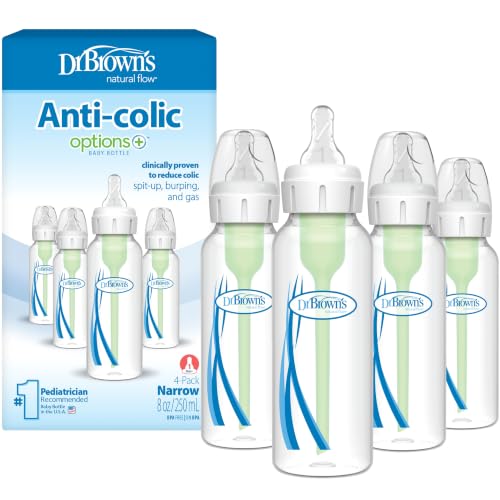
| Dr. Brown’s Options+ Narrow Bottles 8oz 4-pack | A vented bottle for colic-prone newborns | Internal vent system, Level 1 slow-flow nipple |
| Philips Avent Natural Bottles 9oz 4-pack | A nipple that releases milk only when baby drinks | Natural Response nipple, anti-colic valve |
| Comotomo Bottle Double Pack 5oz | A soft silicone bottle that mimics breastfeeding | Medical-grade silicone, slow-flow nipple |
| NUK Simply Natural 5oz 2-pack | A bottle with a temperature check built in | SafeTemp colour-change indicator, anti-colic vents |
| Comotomo 5oz and 8oz 4-pack | A set that grows from newborn to older baby | Two 5oz slow-flow plus two 8oz medium-flow |
How to Choose
Start With Slow Flow for a Newborn
Flow rate is the first decision for a newborn bottle, because a newborn drinks slowly and a fast nipple can flood the mouth. A slow-flow nipple gives the baby control over the pace of the feed, which helps a baby who is still learning to coordinate sucking and swallowing. The Dr. Brown’s Options+ in this guide comes with a Level 1 slow-flow nipple, the Philips Avent uses a Flow 3 medium nipple for babies aged 3 to 6 months, and the Comotomo 5oz has a slow-flow nipple for newborns up to 3 months. Match the nipple to the baby’s age, and move up a flow level only when feeds start taking too long.
Check How the Bottle Handles Air
Air swallowed during a feed is a common cause of gas and fussiness, so venting is the second thing to check. The Dr. Brown’s Options+ uses an internal vent system that keeps air out of the milk, the Philips Avent has an anti-colic valve, and both the Comotomo and the NUK bottles use dual or built-in anti-colic vents. These designs work in different ways, but they share one goal: less air in the milk means less air in the baby. If your newborn is gassy or fussy after feeds, venting should be high on your list, and a bottle with no venting claim should be a harder sell.
Compare Nipple Shape and Feel
A newborn who also breastfeeds needs a nipple that feels familiar, and shape is where bottles differ most. The Comotomo bottle is made from medical-grade silicone with a shape that mimics breastfeeding, which suits parents switching between breast and bottle. The Philips Avent Natural Response nipple releases milk only when the baby drinks, which also copies the way a breast works. The NUK Simply Natural is designed for babies from 1 month, with a shape meant to feel natural in a small mouth. Let the baby try one shape first, and change only if the baby refuses it.
Decide on Material Before You Buy a Set
Bottles come in plastic, silicone, and glass, and the material decision is worth making before you buy a four-pack. Silicone bottles, such as the Comotomo, are soft to hold and squeeze, and they suit parents who want a bottle that feels gentle in the hand. Hard plastic bottles are light and hard to break, which suits a diaper bag. Glass is heavier and breakable, but some parents prefer it because it does not hold milk odours. Check the listing for the material of any bottle you consider, and buy one bottle first to test it before committing to a set.
The 5 Best Options
Dr. Brown’s Options+ Narrow Bottles 8oz 4-pack
The Dr. Brown’s Options+ Narrow is the venting pick of this guide, built around an internal vent system that keeps air out of the milk as the baby drinks. That design is aimed squarely at colic-prone newborns, and the Level 1 slow-flow nipple keeps the pace gentle for a baby who is still learning to feed. The 8oz size, equal to 250mL, gives room to grow beyond the first weeks, and the BPA-free build is the standard parents expect. With four bottles in the pack, there is always a clean one ready while the others wait to be washed.
Specs
- Internal vent system
- Level 1 slow-flow nipple
- BPA-free
- 8oz / 250mL
- 4-pack
Best for: Newborns prone to colic who need venting and a slow flow.
Watch out for: The internal vent adds extra parts to wash, so check the parts list on the listing and make sure you are happy cleaning the vent after every feed.
Philips Avent Natural Bottles 9oz 4-pack
The Philips Avent Natural is the responsive pick of this guide, because its Natural Response nipple releases milk only when the baby drinks. That on-demand flow copies breastfeeding more closely than a nipple that drips on its own, and it gives a newborn control over the pace of the feed. An anti-colic valve keeps air out of the milk, and the 9oz bottles come in a four-pack that covers a full day of feeds. Note the flow level: this set uses Flow 3, a medium flow rated for babies aged 3 to 6 months, so it suits a slightly older baby better than a brand-new newborn.
Specs
- Natural Response nipple releases milk only when baby drinks
- Anti-colic valve
- Flow 3 medium
- 3-6m
- 9oz
- 4-pack
Best for: Babies aged 3 to 6 months who need a responsive nipple and anti-colic venting.
Watch out for: This set uses Flow 3 medium, so for a brand-new newborn you may need a slower-flow nipple, and confirm the flow on the listing before buying.
Comotomo Bottle Double Pack 5oz
The Comotomo 5oz is the softest bottle in this guide, made from medical-grade silicone with a shape that mimics breastfeeding. That combination suits parents who switch between breast and bottle, because the bottle feels familiar to a baby who also nurses. The slow-flow nipple is made for newborns up to 3 months, so the pace matches a baby who is still learning to feed, and the dual anti-colic vents keep air out of the milk. The 5oz size is right for the small feeds of the first weeks, and the two-pack lets you try the shape before committing to a larger set.
Specs
- Medical-grade silicone
- Slow-flow nipple for newborns up to 3 months
- Dual anti-colic vents
- Mimics breastfeeding
- 5oz
- Double pack
Best for: Breastfed newborns up to 3 months who need a soft silicone bottle.
Watch out for: The 5oz size is small, so a fast-growing baby may outgrow it within a few months, and confirm the nipple flow on the listing.
NUK Simply Natural 5oz 2-pack

The NUK Simply Natural is the only bottle in this guide with a built-in temperature check, and that feature is genuinely useful at 3 a.m. The SafeTemp colour-change indicator shows when the milk is too hot, which removes the guesswork from warming a bottle for a newborn. Anti-colic vents keep air out of the milk, and the bottle is made for babies from 1 month, so it suits a newborn who has settled into a feeding routine. The 5oz size matches the small feeds of the early weeks, and the two-pack is a low-cost way to test the shape before buying more.
Specs
- SafeTemp colour-change indicator
- Anti-colic vents
- From 1 month
- 5oz
- 2-pack
Best for: Parents who want a temperature check on the bottle for a baby from 1 month.
Watch out for: The 5oz size is small for an older baby, so check how long you expect to use it, and confirm the indicator on the listing.
Comotomo 5oz and 8oz 4-pack
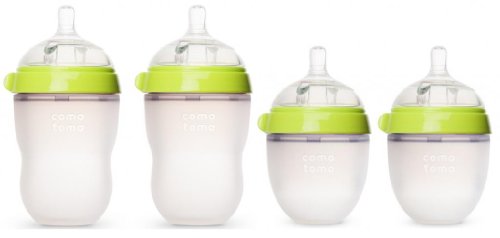
The Comotomo 5oz and 8oz 4-pack is the grow-with-baby set of this guide, combining two 5oz bottles with slow-flow nipples and two 8oz bottles with medium-flow nipples. That mix covers the newborn months and the months that follow, so parents do not need to buy a second set as feeds get bigger. Like the smaller Comotomo pack, these bottles are made from medical-grade silicone with dual anti-colic vents and a shape that mimics breastfeeding. It is the best value of the Comotomo options here for parents who already know the shape works for their baby.
Specs
- Two 5oz slow-flow bottles
- Two 8oz medium-flow bottles
- Medical-grade silicone
- Dual anti-colic vents
- Mimics breastfeeding
- 4-pack
Best for: Parents who want one set that covers newborn slow-flow feeds and later medium-flow feeds.
Watch out for: Buy the smaller Comotomo pack first if your baby has not tried the shape yet, and confirm the nipple flows on the listing before ordering.
Which One Fits Your Situation
For a Newborn Who Is Gassy After Feeds
If your newborn is fussy or gassy after feeds, venting should come first. The Dr. Brown’s Options+ leads here with its internal vent system and Level 1 slow-flow nipple, which together keep air out of the milk and the pace gentle. The Comotomo 5oz is the softer alternative, with dual anti-colic vents and a silicone body that mimics breastfeeding. Try one bottle first, and keep the one the baby settles with.
For a Baby Who Also Breastfeeds
Switching between breast and bottle is easier when the nipple feels familiar. The Comotomo bottles are made from medical-grade silicone with a shape that mimics breastfeeding, and the slow-flow nipple suits newborns up to 3 months. The Philips Avent Natural Response nipple is the other strong choice, because it releases milk only when the baby drinks. Pick the Comotomo for softness, or the Avent for the responsive flow.
For a Baby Aged 3 to 6 Months
Once a baby passes 3 months, feeds get bigger and a slow-flow nipple can make them drag on. The Philips Avent set in this guide uses Flow 3 medium for babies aged 3 to 6 months, and the Comotomo 4-pack pairs two 8oz medium-flow bottles with two 5oz slow-flow ones. Choose the Avent for a responsive nipple, or the Comotomo set if you want sizes that cover the next stage as well.
For Parents Who Want a Temperature Check
Warming milk to the right temperature is a nightly worry, and the NUK Simply Natural answers it with a SafeTemp colour-change indicator that shows when milk is too hot. It also has anti-colic vents and suits babies from 1 month, so it covers the basics as well as the extra. The 5oz two-pack is a low-cost way to test it, and the indicator is most useful for parents warming bottles in the middle of the night.
Common Mistakes
- Buying a fast-flow nipple for a brand-new newborn who still needs a slow pace.
- Buying a four-pack before the baby has tried the nipple shape once.
- Ignoring venting, then wondering why the baby is gassy after every feed.
- Choosing a bottle by looks instead of checking the material on the listing.
- Sticking with a 5oz bottle long after the baby has outgrown it.
Frequently Asked Questions
What flow nipple does a newborn need?
A newborn needs a slow-flow nipple, because a newborn drinks slowly and a fast nipple can flood the mouth. The Dr. Brown’s Options+ in this guide has a Level 1 slow-flow nipple, and the Comotomo 5oz has a slow-flow nipple for newborns up to 3 months. Move to a medium flow only when feeds start taking too long or the baby seems frustrated.
Which bottle is best for a colicky baby?
A bottle with proven venting is the best starting point for a colicky baby. The Dr. Brown’s Options+ uses an internal vent system, while the Philips Avent, Comotomo, and NUK bottles all have anti-colic valves or vents. Venting keeps air out of the milk, which means less air swallowed during the feed. Try one vented bottle first and see whether the fussiness eases.
Should I choose silicone, plastic, or glass bottles?
The material decision is personal, so check the listing before buying. Silicone bottles, such as the Comotomo, are soft to hold and suit parents who want a gentle feel. Hard plastic bottles are light and hard to break, which suits a diaper bag. Glass is heavier and breakable, but some parents prefer it because it does not hold milk odours. Buy one bottle first to test the material.
How many bottles do I need for a newborn?
A four-pack is a good starting point for a newborn, because it covers a full day of feeds with one always clean while the others wait to be washed. The Dr. Brown’s, Philips Avent, and Comotomo 4-pack in this guide all come as four bottles. Start with one bottle to test the shape, then buy the set once you know the baby accepts it.
Related guides
More from Amazon
Programs that pair well with the guide above. Offers and eligibility are set by Amazon and may change.
Set up recurring deliveries of everyday items on eligible products. Terms and savings are set by Amazon.
Explore Subscribe & SaveFree shipping on eligible items, Prime Video and more. Eligible new members can start with a free trial.
Start a Prime free trialAudiobooks and podcasts to listen to on the go. Eligible new members can start with a free trial.
Try Audible freeRead from a large library of eBooks and audiobooks on any device. Check Amazon for current plans.
Explore Kindle UnlimitedAs an Amazon Associate we earn from qualifying purchases.


Write Your Review
No reviews yet. Be the first to share your experience!