
Key takeaways
- Compare five foam rollers for lower back comfort, from soft 18-inch rollers to firm 36-inch models, with density, length, and diameter details.
What's inside
As an Amazon Associate I earn from qualifying purchases. This post may contain affiliate links at no extra cost to you.
Rolling the lower back is less about pressing hard and more about finding a density and length that let the muscles relax. A roller that is too firm can make a sore back guard up instead of easing off, while a roller that is too soft may not reach the muscles that need attention. Length matters too: a longer roller supports the whole back at once, while a shorter one is easier to carry and to position under one side at a time. The right pick balances those three choices.
This guide is for people looking for general comfort and recovery support for a sore lower back, whether after workouts, long drives, or desk days. Every roller below was chosen from its Amazon listing title and details, with length, diameter, density, and construction stated from the listing. Anyone with an ongoing back condition should check with a clinician before starting a new rolling routine.
Quick Picks
As an Amazon Associate we earn from qualifying purchases.
| Product | Best for | Key spec from title |
|---|---|---|
| TriggerPoint CORE 18-inch | Gentle first roller for a tender lower back | 18-inch solid-core EVA roller, softer than GRID |
| Gaiam Restore Muscle Therapy 36-inch | Full-back coverage with a middle density | 36-inch medium semi-firm roller with digital workout |
| Gaiam Restore Textured 18-inch | Targeted rolling with a textured grip in a travel size | 18-inch medium-density lightly textured roller |
| LuxFit Speckled 36-inch | Deep pressure for backs used to regular rolling | 36-inch extra-firm molded polypropylene roller |
| OPTP PRO-Roller Standard Density 36 x 4-inch | Full-back length with a narrower, focused profile | 36-inch standard-density closed-cell EVA roller |
How to Choose
Pick a Gentler Density First
Density decides how a roller feels against a sore back, and gentler is the safer starting point. A soft or medium roller spreads pressure over a wider area, which lets tight muscles ease off instead of bracing against a hard surface. An extra-firm roller gives deeper pressure, but that depth only helps once the back is used to rolling. The picks in this guide run from the softer TriggerPoint CORE, through two medium Gaiam rollers and the standard-density OPTP, up to the extra-firm LuxFit. Start low on that scale and move firmer only after weeks of comfortable sessions.
Choose the Length for Back Coverage
Length decides whether the roller supports the whole back or one area at a time. A 36-inch roller spans the back from side to side, so the user can lie across it and work both sides without repositioning, which suits full-back routines and taller users. An 18-inch roller covers one side at a time and needs the user to shift it between areas, but it packs into a gym bag and fits in a car boot for travel. Think about where rolling happens most: a home routine favors the longer size, while gym or travel use favors the shorter one.
Check the Diameter and Core
Diameter and core construction change the feel of every roll. A 6-inch diameter roller sits higher off the floor and spreads body weight over a broader curve, while a 4-inch roller, like the OPTP in this guide, gives a narrower line of pressure that feels more focused. A solid core holds its shape steadily under weight, as the TriggerPoint CORE does, while a hollow core, like the Gaiam Muscle Therapy roller, keeps the roller lighter. A stated weight limit is worth checking too: the TriggerPoint CORE lists a limit of 325 lb.
Look at Extras and Warranty
Extras rarely decide a purchase, but they can break a tie between two similar rollers. A textured surface adds grip and feedback, which some users like for targeted work and others find too strong on a sore back. A guided routine helps a first-time user start with good habits, and the Gaiam Muscle Therapy roller includes a 15-minute digital workout for that reason. A warranty adds peace of mind on a firmer roller that takes heavy use, and the LuxFit lists a 3-year warranty. Treat each extra as a bonus once density, length, and diameter are settled.
The 5 Best Options
TriggerPoint CORE 18-inch
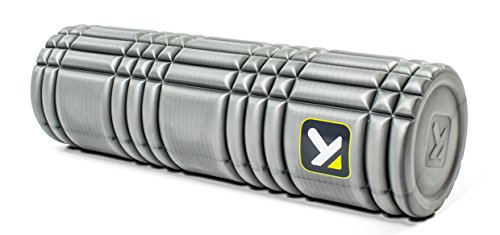
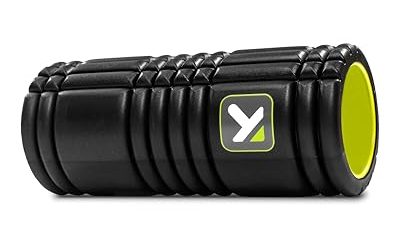
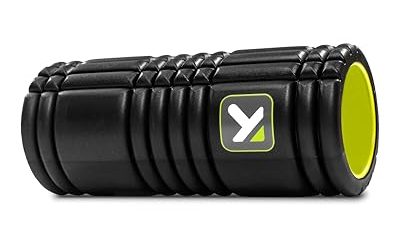
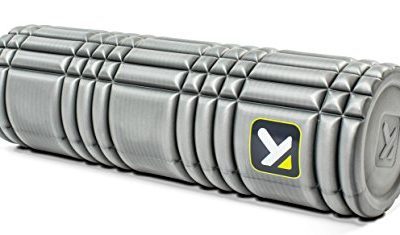
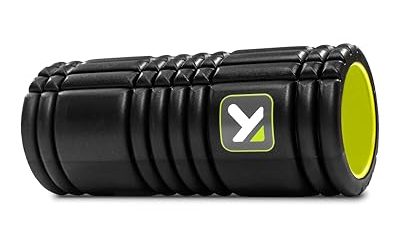
The TriggerPoint CORE at 18 inches is the gentlest starting point in this guide, and that softness is the reason it leads. Its solid-core EVA build gives a steady, even feel without the hard ridges found on firmer rollers, and the maker describes it as softer than the GRID line, which makes it a sensible first roller for a tender lower back. At 18 inches long and 5.5 inches across, it fits in a gym bag and works well for rolling one side of the back at a time. A stated limit of 325 lb covers most users.
Specs
- 18 inches long by 5.5 inches in diameter
- Solid-core EVA construction
- Softer than the GRID line
- 325 lb weight limit stated
Best for: A gentle first roller for a tender lower back.
Watch out for: At 18 inches it covers one side of the back at a time, so check the length suits the rolling style planned.
Gaiam Restore Muscle Therapy 36-inch

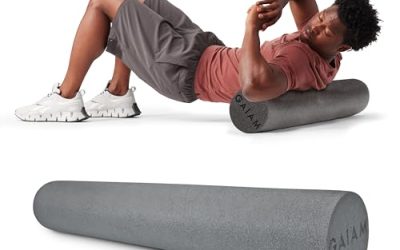
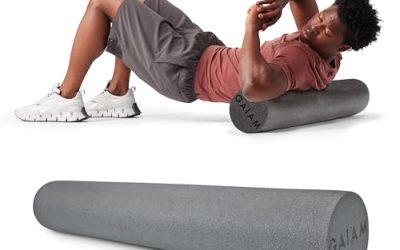
The Gaiam Restore Muscle Therapy roller stretches a full 36 inches, so it can support the entire back in one position instead of asking the user to roll one side and then the other. Its medium, semi-firm density sits in the middle of this guide: firmer than the TriggerPoint CORE above, yet short of the extra-firm LuxFit below, which makes it a middle step for backs that have grown used to rolling. A hollow core keeps it light, and the included 15-minute digital workout gives a guided starting routine for anyone new to the practice.
Specs
- 36 inches long
- Medium, semi-firm density
- Hollow core
- Includes a 15-minute digital workout
Best for: Full-back coverage with a middle density.
Watch out for: A hollow core feels different under body weight than a solid core, so check the listing construction notes before ordering.
Gaiam Restore Textured 18-inch
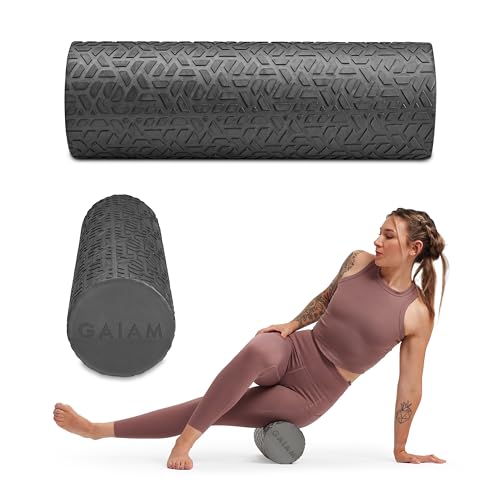
The Gaiam Restore Textured roller pairs an 18-inch length with a lightly textured surface, giving a little more grip and feedback than a smooth roller of the same size. Its medium density matches the longer Gaiam above, so the choice between the two comes down to length and texture rather than firmness: this one travels easily and targets one area at a time, while the 36-inch version covers the whole back. At around 6 inches across, it sits a touch higher off the floor than the TriggerPoint CORE, which changes the angle of pressure on the lower back.
Specs
- 18 inches long, around 6 inches in diameter
- Medium density
- Lightly textured surface
Best for: Targeted rolling with a textured grip in a travel size.
Watch out for: The texture adds feedback that some sore backs may find too much at first, so start with light pressure.
LuxFit Speckled 36-inch

The LuxFit Speckled roller is the firmest pick here, built for backs that already tolerate regular rolling and want deeper pressure. Its molded polypropylene body is rated at 2 lb per cubic foot, and the extra-firm density holds its shape under body weight where softer rollers compress. The 36-inch length and 6-inch diameter give full-back coverage with a broad contact area, and a 3-year warranty is listed. Anyone new to rolling should work up to this density rather than starting here, and anyone with a sensitive back should take it slowly.
Specs
- 36 inches long by 6 inches in diameter
- Extra-firm molded polypropylene, 2 lb per cubic foot
- 3-year warranty
Best for: Deep pressure for backs used to regular rolling.
Watch out for: Extra-firm density is a big step up from medium rollers, so build up gradually and stop if discomfort grows.
OPTP PRO-Roller Standard Density 36 x 4-inch

The OPTP PRO-Roller in standard density takes a different approach to the same 36-inch length: its 4-inch diameter is narrower than the 6-inch rollers in this guide, which gives a more focused line of pressure along the back. Closed-cell EVA keeps the surface smooth and easy to wipe down, and the standard, medium density sits between the gentle TriggerPoint CORE and the extra-firm LuxFit. For a user who wants full-back length without the broader feel of a 6-inch roller, the slimmer profile is the deciding feature.
Specs
- 36 inches long by 4 inches in diameter
- Standard, medium density
- Closed-cell EVA construction
Best for: Full-back length with a narrower, more focused profile.
Watch out for: This roller is 4 inches across, not 6, so confirm the diameter on the listing matches the rolling style planned.
Which One Fits Your Situation
A Tender Back That Is New to Rolling
Choose the TriggerPoint CORE 18-inch. Its solid-core EVA build is softer than the GRID line, the 18-inch size is easy to position, and the stated 325 lb limit covers most users. Start with short, gentle sessions and light pressure. Roll on a flat surface with knees bent, and keep the first sessions to a few slow passes.
Full-Back Coverage in One Position
Choose the Gaiam Restore Muscle Therapy 36-inch or the OPTP PRO-Roller 36-inch. The Gaiam gives a medium, semi-firm feel with a guided workout, while the OPTP gives a slimmer 4-inch profile for more focused pressure. Pick the Gaiam for breadth, the OPTP for focus. Both rollers suit home routines where the roller stays in one room.
Targeted Rolling on the Go
Choose the Gaiam Restore Textured 18-inch. It packs easily, the light texture adds grip, and the medium density works for most backs. Keep sessions short when rolling a sore spot, and ease off if the texture feels too strong. It fits in a gym bag beside a water bottle, and it works on a carpeted floor as well as a mat.
Deeper Pressure After Months of Rolling
Choose the LuxFit Speckled 36-inch. The extra-firm molded body holds its shape under weight, the 36-inch length covers the whole back, and the 3-year warranty is listed. Work up to it gradually rather than starting here. Keep sessions short at first with the firmer density, and back off whenever the pressure feels sharp.
Common Mistakes
- Starting with the firmest roller available instead of building up from a gentler density.
- Rolling directly on the spine with hard pressure instead of working the muscles beside it.
- Choosing a short roller and then struggling to support the whole back at once.
- Confusing diameter with length: a 4-inch roller feels very different from a 6-inch one.
- Skipping a clinician check when back pain is ongoing, sharp, or comes with other symptoms.
Frequently Asked Questions
How often should I roll my lower back?
Short sessions a few times a week suit most people, with light pressure and slow movement. Keep each pass gentle, breathe normally, and stop if discomfort grows rather than pushing through it. Two or three sessions a week is a reasonable starting point, with rest days in between.
Is a firmer roller better for lower back pain?
Not always. A firmer roller gives deeper pressure, but a sore back often responds better to a gentler density first. Many people start soft or medium and move firmer only after weeks of comfortable rolling. If a medium roller already feels intense, there is no need to move firmer.
Should I roll directly on my spine?
General guidance is to roll the muscles on either side of the spine rather than pressing hard on the spine itself. Keep pressure moderate, move slowly, and check with a clinician if unsure about technique. A clinician can show the right technique for a specific back, so ask at the next visit if unsure.
What length foam roller is best for the lower back?
A 36-inch roller supports the whole back in one position, which suits full-back work, while an 18-inch roller is easier to carry and to position under one side. Choose by whether coverage or portability matters more. A home routine usually favors 36 inches, while a gym bag usually favors 18.
Related guides
More from Amazon
Programs that pair well with the guide above. Offers and eligibility are set by Amazon and may change.
Set up recurring deliveries of everyday items on eligible products. Terms and savings are set by Amazon.
Explore Subscribe & SaveFree shipping on eligible items, Prime Video and more. Eligible new members can start with a free trial.
Start a Prime free trialAudiobooks and podcasts to listen to on the go. Eligible new members can start with a free trial.
Try Audible freeRead from a large library of eBooks and audiobooks on any device. Check Amazon for current plans.
Explore Kindle UnlimitedAs an Amazon Associate we earn from qualifying purchases.
Write Your Review
No reviews yet. Be the first to share your experience!