
Key takeaways
- Compare five wearable pulse oximeters that record oxygen and pulse all night, with ring and wrist options, long batteries and morning reports.
What's inside
As an Amazon Associate I earn from qualifying purchases. This post may contain affiliate links at no extra cost to you.
The real decision behind overnight monitoring is not which screen looks best in a ten-second reading. It is whether a device can stay on your body, keep recording, and still have power and stored data when you wake up. A fingertip unit that needs a finger held still and a button pressed cannot do that job, so this guide only includes wearables built for continuous overnight tracking.
This article is for people who snore heavily and want a record to discuss with a clinician, partners keeping an eye on nighttime breathing patterns, and anyone asked to track overnight oxygen trends at home. Every pick below comes from Amazon product titles and listings for wearable ring, wrist, or continuous-monitoring oximeters with the battery life and memory that a full night demands.
Quick Picks
As an Amazon Associate we earn from qualifying purchases.
| Product | Best for | Key spec from title |
|---|---|---|
| Wellue Wrist Checkme O2 Max | Long stretches of tracking between charges | 72-hour battery life |
| Wellue Checkme O2 Ultra Wrist | The longest endurance on this list | 100-hour endurance |
| Wellue O2Ring | The least noticeable thing to wear in bed | Ring design with 16-hour battery |
| Wellue O2Ring-S | Several nights stored before you download | Built-in memory for four 10-hour sessions |
| CMI Health Rechargeable PC-66 | Continuous monitoring with an adjustable alarm | Alarm for SpO2 and pulse rate |
How to Choose
Battery life that outlasts the whole night
A single night of sleep runs seven to nine hours, and a device that dies at hour five leaves the most important part of the night unrecorded. Look for a stated battery figure comfortably above one night, because batteries weaken with age and a cold bedroom does them no favours. The ring on this list runs 16 hours, which covers a night with room to spare, while the wrist models stretch to 72 and even 100 hours, so one charge can cover a week of tracking instead of becoming another nightly chore before bed.
Memory and next-morning reports
Overnight data only helps if you can review it calmly the next day, ideally as a trend across the whole night rather than a single number. Check whether the device stores sessions on board and how it hands the data over: app reports suit quick phone checks, while PC reports are easier to save, print, or share at an appointment. The O2Ring-S, for example, holds four 10-hour sessions in built-in memory, so a few nights can pass before you need to download anything to look at the pattern.
Ring versus wrist comfort
You will wear this device for hours while turning over, tucking a hand under a pillow, and sleeping on your side, so the format matters as much as the sensor. A ring concentrates everything on one finger, which many people forget about within minutes, but a sensitive sleeper may notice it on a finger they curl. A wrist unit spreads the weight onto a strap with a small finger sensor, which feels more like a watch. Neither is automatically better; the right choice is the one you will actually keep on until morning.
Why fingertip spot-check units do not qualify
A standard fingertip oximeter is built for a moment: clip it on, wait for a steady reading, take it off. It has no strap to keep it in place, no session memory for hours of data, and no design for staying attached while you roll over. At least one popular fingertip model states in its own listing answers that it cannot be used to monitor overnight. That is not a flaw; it is simply a different tool. Overnight tracking needs a wearable designed to record continuously, which is why every pick here is a ring, wrist, or continuous-monitoring unit.
The 5 Best Options
Wellue Wrist Checkme O2 Max
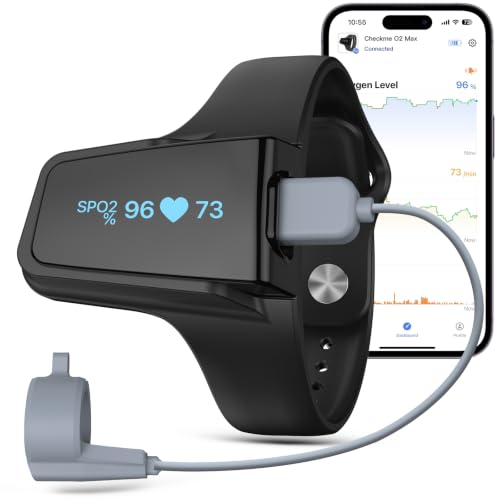
If you want to track several nights in a row without thinking about a charger, this wrist model is the natural starting point. Its 72-hour battery life means a single charge can cover most of a week of nights, and continuous SpO2 tracking runs while you sleep rather than sampling a moment. Bluetooth connects it to app and PC reports for morning review. The listing notes the device is not a medical device, so treat its overnight records as personal wellness tracking to discuss with a clinician, not as medical monitoring or a diagnosis.
Specs
- Audio reminder
- Bluetooth
- Continuous SpO2 tracking
- 72-hour battery life
- App and PC reports
- Listing notes it is not a medical device
Best for: Multi-night tracking with minimal charging.
Watch out for: The wrist-and-sensor format is bulkier than a ring, so check the listing photos if you are a light sleeper.
ASIN: B0DMZQ15BB
Wellue Checkme O2 Ultra Wrist
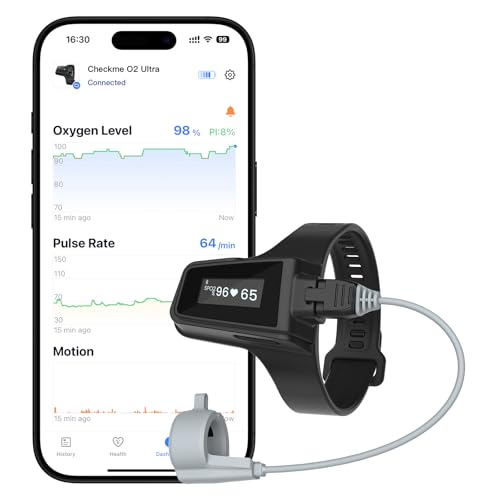
Endurance is the headline here: the Checkme O2 Ultra lists 100-hour endurance, the longest figure among these picks, which suits travel, shift work, or simply forgetting to charge things. An audible reminder adds a prompt if readings cross the limits you set, and the unit is rechargeable, with free PC software and an app for reviewing sessions. For someone who wants to start a tracking habit and keep it going for weeks without the routine collapsing around charging cables, that combination of stamina and software support is the appeal.
Specs
- 100-hour endurance
- Audible reminder
- Rechargeable
- Free PC software and app
Best for: The longest tracking stretches between charges.
Watch out for: An audible reminder can disturb a partner, so think about who else sleeps in the room before relying on it.
ASIN: B0DN115TGB
Wellue O2Ring

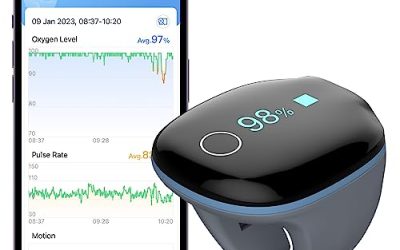
The O2Ring shrinks the whole idea down to a ring you wear on a finger, which is the easiest format to forget you are wearing. It records SpO2 and pulse rate continuously, connects over Bluetooth, and produces app and PC reports so the night becomes a reviewable record rather than a guess. A vibration reminder can nudge the wearer without a sound that fills the room. Its 16-hour battery covers a full night with margin, though not several nights, so a morning recharge routine becomes part of the habit.
Specs
- Ring design
- Vibration reminder
- Bluetooth
- Rechargeable
- Continuous recording of SpO2 and pulse rate
- App and PC reports
- 16-hour battery
Best for: Sleepers who want the smallest, least noticeable wearable.
Watch out for: The 16-hour battery means charging after each night or two, unlike the wrist models here.
ASIN: B08VW3VQKW
Wellue O2Ring-S

Think of the O2Ring-S as the ring option for people who do not want to sync anything daily. Its built-in memory holds four 10-hour sessions, so a long weekend of nights stays on the device until you sit down with the app or PC reports. The 24-hour battery life covers a night easily and stretches into a second, and it tracks SpO2 and pulse rate like its sibling. If your plan is to gather several nights of data and review them together before an appointment, that onboard storage is the practical difference.
Specs
- 24-hour battery life
- Built-in memory for four 10-hour sessions
- Tracks SpO2 and pulse rate
- Rechargeable
- PC and app reports
Best for: Collecting several nights before downloading and reviewing.
Watch out for: Once the four stored sessions fill up, older data needs to have been downloaded, so build in a weekly sync.
ASIN: B0CKVTYGCW
CMI Health Rechargeable PC-66

The PC-66 takes a different shape from the rings and wrist straps: it is a rechargeable unit built for both continuous monitoring and spot-checking, with an adjustable alarm covering SpO2 and pulse rate. That dual role suits someone who wants one device for a quick daytime reading and for overnight sessions. A carry case and AC adapter are included, which keeps the kit together for travel or a bedside drawer. It is the pick for buyers who prefer a more traditional monitor layout over a minimal wearable ring.
Specs
- Adjustable alarm for SpO2 and pulse rate
- Continuous monitoring and spot-checking
- Rechargeable
- Carry case and AC adapter included
Best for: One device covering overnight sessions and daytime spot checks.
Watch out for: Confirm from the listing how it is worn or positioned for continuous use, since it is not a ring or wrist strap design.
ASIN: B07KGHKQHT
Which One Fits Your Situation
You want a record to take to a sleep appointment
Gather several nights rather than one. The O2Ring-S stores four 10-hour sessions on board, so you can arrive with a pattern instead of a single evening, and its PC and app reports make the data easy to show. The wrist models also report through an app and PC, so any of them beats a fingertip reading taken once at bedtime.
Charging cables are where your habits go to die
Pick endurance. The Checkme O2 Ultra lists 100-hour endurance and the Checkme O2 Max 72 hours, so charging becomes a weekly task instead of a nightly one. A device that is flat at bedtime records nothing, and the most common reason overnight tracking fails is a dead battery on the third night, not the sensor.
You barely tolerate wearing anything to bed
Start with a ring. The O2Ring puts everything on one finger and vibrates quietly instead of sounding an alarm, which suits light sleepers and shared beds. If a ring on a curled finger bothers you, the wrist formats spread the hardware onto a strap instead. Comfort decides consistency, and consistency is what makes overnight data worth looking at.
Your partner is the one worried about your nights
Choose a device with a reminder and reports you can review together. The Checkme O2 Max adds an audio reminder, the O2Ring vibrates on the finger, and the PC-66 offers an adjustable alarm for oxygen and pulse. Morning reports then turn a worried conversation into a shared look at actual recorded trends across the night.
Common Mistakes
- Buying a fingertip spot-check unit for overnight use, when its design and even its own listing say it cannot monitor through the night.
- Choosing the shortest battery on the shelf and losing the second half of the night when it runs flat.
- Recording for weeks but never opening the app or PC reports, so the data never becomes a pattern you can act on.
- Treating wellness tracking numbers as a diagnosis instead of bringing the reports to a clinician for interpretation.
- Wearing the sensor loosely or on a cold finger and then blaming the device for patchy overnight data.
Frequently Asked Questions
Can a fingertip pulse oximeter monitor me overnight?
No, not in any practical sense. Fingertip units are made for spot checks: they have no strap, no session memory for hours of recording, and nothing to keep them in place while you move in your sleep. One popular fingertip model states in its own listing answers that it cannot be used to monitor overnight. Choose a ring or wrist wearable instead.
Are these overnight oximeters medical devices?
Treat them as wellness trackers unless a listing says otherwise. Wellue listings for these wearables note the devices are not medical devices, so the overnight record is personal tracking data. That data can be genuinely useful to discuss with a clinician, especially as a multi-night trend, but it does not diagnose sleep apnoea or any other condition on its own.
How long should the battery last for overnight monitoring?
One night needs at least eight to ten hours of recording, and real life adds setup time and an ageing battery, so a stated figure of 16 hours or more is a sensible floor. The wrist options here go far beyond that, at 72 and 100 hours, which removes charging from the nightly routine and keeps a tracking habit alive.
Ring or wrist: which is more comfortable for sleeping?
It depends on how you sleep. A ring is the smallest option and suits people who dislike straps, though side sleepers who curl a hand under the pillow may notice it. A wrist unit feels more like wearing a watch, with a small sensor on the finger. Pick the format you are most likely to keep on until morning.
Related guides
More from Amazon
Programs that pair well with the guide above. Offers and eligibility are set by Amazon and may change.
Set up recurring deliveries of everyday items on eligible products. Terms and savings are set by Amazon.
Explore Subscribe & SaveFree shipping on eligible items, Prime Video and more. Eligible new members can start with a free trial.
Start a Prime free trialAudiobooks and podcasts to listen to on the go. Eligible new members can start with a free trial.
Try Audible freeRead from a large library of eBooks and audiobooks on any device. Check Amazon for current plans.
Explore Kindle UnlimitedAs an Amazon Associate we earn from qualifying purchases.
Write Your Review
No reviews yet. Be the first to share your experience!