
Key takeaways
- Compare five foam rollers for runners, from firm 13-inch rollers to long 36-inch rollers, with densities and listing specs for legs and calves.
What's inside
As an Amazon Associate I earn from qualifying purchases. This post may contain affiliate links at no extra cost to you.
A runner choosing a foam roller is really choosing how much pressure the roller can put on calves, quads, hamstrings, and the side of the thigh after a run. A roller that is too soft sinks under dense leg muscle and feels pleasant without doing much, while a roller that is too firm can feel harsh on tender spots the day after a long run. Length matters just as much, because a short roller moves easily around a calf and fits a gym bag, while a long roller covers both legs at once and stays steady under the back.
This guide is for road runners, trail runners, and track runners who roll at home, at the gym, or beside the track, and for beginners who want one roller that covers the main leg muscles. Every pick below was chosen from its Amazon product title and listing details, with length, diameter, density, core type, and surface pattern stated, so the rollers can be compared on construction rather than on claims.
Quick Picks
As an Amazon Associate we earn from qualifying purchases.
| Product | Best for | Key spec from title |
|---|---|---|
| TriggerPoint GRID 1.0 13-inch | Firm rolling for calves and quads on the go | 13-inch multi-density GRID pattern over a rigid hollow core |
| TriggerPoint CORE 18-inch | Softer full-leg rolling at home | 18-inch solid-core EVA roller, softer than the GRID |
| LuxFit Speckled 36-inch | Extra-firm rolling for dense leg muscle | 36-inch extra-firm molded polypropylene roller |
| 321 STRONG Medium Density | Gentle medium rolling for sensitive legs | Medium-density textured roller, about 12.5 inches long |
| OPTP PRO-Roller Standard Density 36×4-inch | Slim long roller for calves and the side of the thigh | 36-inch standard-density roller with a 4-inch diameter |
How to Choose
Match Length to the Muscle You Roll Most
Length decides which muscles a roller reaches comfortably and how steady it feels under your body. A 13-inch roller suits calves and single-leg work, because it turns easily and fits in a gym bag beside shoes and a water bottle. An 18-inch roller covers a wider area and suits runners who roll both quads or both hamstrings in one pass. A 36-inch roller spans the full width of the back and both legs, so it stays stable for two-legged rolling and for lying across it. Before you buy, picture the muscle you roll most often and pick the shortest length that still covers it.
Choose Density for Dense Leg Muscle
Density decides how much pressure reaches the muscle, and leg muscle is dense, so most runners need a firmer roller than a casual user. An extra-firm roller holds its shape under body weight and presses into calves and quads without flattening, which suits runners who want strong pressure after hard sessions. A medium-density roller gives a gentler feel and suits sore legs the day after a long run, or runners who are new to rolling. A softer solid-core roller sits between the two and suits runners who want steady pressure without a hard surface. Try to match density to your tolerance, not to the firmest option on the shelf.
Weigh Portability Against Full-Body Coverage
A roller you leave at home can be long, while a roller you carry to the gym or the track needs to fit a bag and a car boot. Short rollers around 12 to 13 inches travel well and work fine for calves, quads, and hamstrings one leg at a time. Long 36-inch rollers cover the back, glutes, and both legs, but they are awkward to carry and need floor space at home. Runners who roll in two places often end up with a short roller for travel and a long roller at home, so decide which place matters more before choosing a single length.
Check the Core and Surface Before You Buy
The core and the surface decide whether a roller keeps its shape and how it feels on skin. A rigid hollow core gives a firm, consistent feel and resists flattening under body weight, while a solid-core EVA roller gives a softer, more forgiving feel. A molded polypropylene core gives a very firm feel that holds up under heavy use. The surface matters too: a textured or patterned surface grips skin and clothing, a lightly textured surface feels smoother, and a smooth surface glides easily. Check the listing for core type and surface, then match them to the pressure you want.
The 5 Best Options
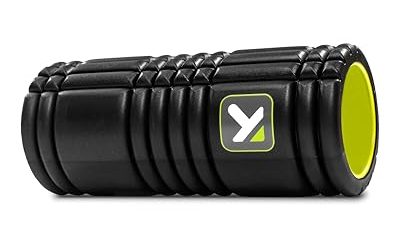
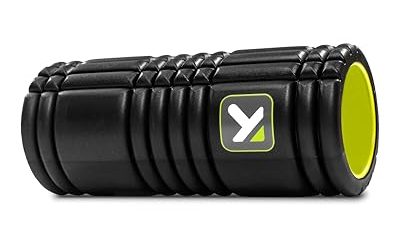
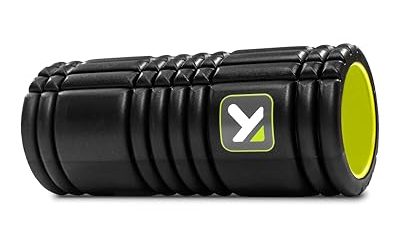
TriggerPoint GRID 1.0 13-inch

The GRID 1.0 suits runners who want firm pressure in a roller small enough to carry. At 13 inches long it fits a gym bag, a car boot, or a corner of a track bag, and it works well on calves, quads, and hamstrings one leg at a time. The multi-density pattern gives varied pressure across the surface, so a runner can shift position to find a firmer or gentler spot. It is a practical first firm roller for runners who roll after most runs.
Specs
- 13 inches long and 5.5 inches in diameter
- EVA foam over a rigid hollow core
- Multi-density GRID pattern on the surface
- Compact size for travel and gym bags
Best for: Runners who want a firm, portable roller for calves and quads after a run.
Watch out for: Check the listing for the 13-inch size before ordering, since this roller is also sold in other lengths.
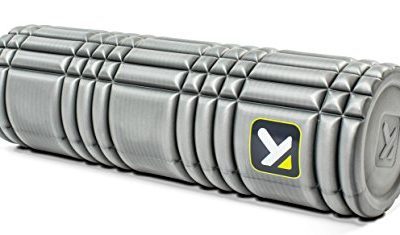
TriggerPoint CORE 18-inch
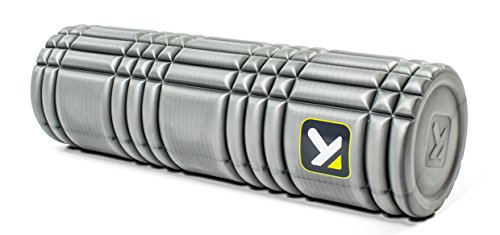
The CORE 18-inch suits runners who find the GRID too firm and want a gentler roller that still covers a full leg. At 18 inches it spans both quads or both hamstrings in one pass, and the solid core gives a softer, more forgiving feel than a hollow-core roller. It works well for easy days, for runners returning to rolling after time away, and for anyone whose legs feel tender after a long run. The extra length also makes it steadier under the back.
Specs
- 18 inches long and 5.5 inches in diameter
- Solid-core EVA construction
- Softer feel than the GRID roller
- Stated weight limit of 325 lb
Best for: Runners who want a softer 18-inch roller for full-leg rolling at home.
Watch out for: The softer feel suits tender legs, so runners who want strong pressure may prefer a firmer roller from this guide.
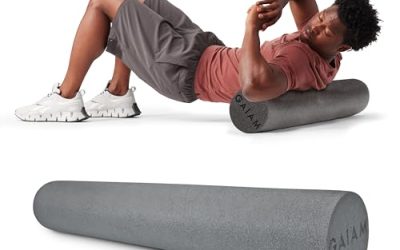
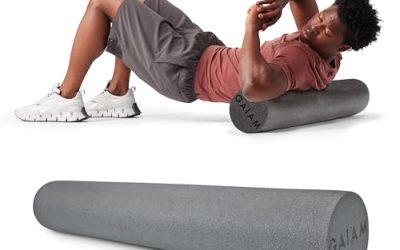
LuxFit Speckled 36-inch

The LuxFit Speckled 36-inch suits runners who want the firmest pressure in this guide and a roller long enough for the whole body. At 36 inches it covers both legs at once and lies flat under the back, so it works for two-legged rolling, glutes, and back work without repositioning. The extra-firm molded core holds its shape under body weight, which matters for dense calf and quad muscle. It is a home roller rather than a travel roller, and it suits runners who roll in one place.
Specs
- 36 inches long and 6 inches in diameter
- Extra-firm molded polypropylene construction
- Density of 2 lb per cubic foot
- 3-year warranty stated on the listing
Best for: Runners who want extra-firm pressure and full-body coverage at home.
Watch out for: The extra-firm feel can be intense on tender spots, so start with short passes and light body weight.
321 STRONG Medium Density
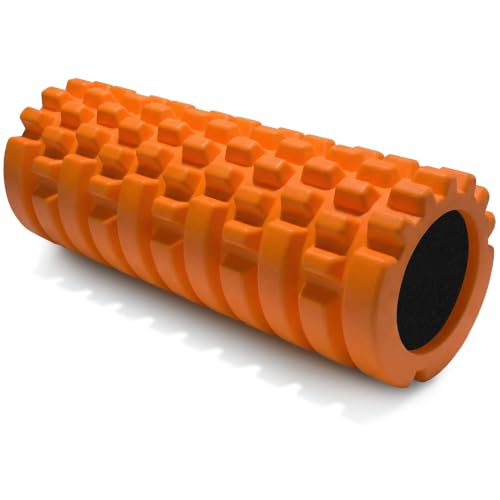
The 321 STRONG roller suits runners who are new to rolling or whose legs feel sensitive after long runs. Its medium density gives a gentler feel than the firm rollers in this guide, while the textured surface still grips well enough for controlled rolling on calves and quads. At about 12.5 inches long it travels easily and works one leg at a time, which suits runners who roll beside the track or in a small flat. The included eBook gives extra guidance for runners learning the basics.
Specs
- About 12.5 to 12.75 inches long and 5.25 to 5.5 inches in diameter
- Medium-density BPA-free closed-cell EVA foam
- 3-zone textured surface
- Includes a 4K eBook
Best for: New runners and runners with sensitive legs who want a gentle medium roller.
Watch out for: The compact length suits one leg at a time, so runners who want to roll both legs together should look at an 18-inch or 36-inch roller.
OPTP PRO-Roller Standard Density 36×4-inch

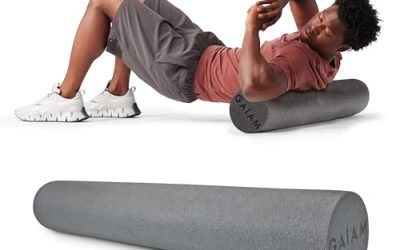
The OPTP PRO-Roller suits runners who want a long roller with a slimmer diameter for targeted work on calves and the side of the thigh. At 36 inches long it covers the back and both legs, while the 4-inch diameter reaches narrower areas that a wider roller skips over. The standard density gives medium pressure that suits regular rolling after runs without the intensity of an extra-firm roller. It is a useful home roller for runners who already own a short travel roller.
Specs
- 36 inches long and 4 inches in diameter
- Standard density, also described as medium density
- Closed-cell EVA foam construction
- Slim diameter for targeted rolling
Best for: Runners who want a slim long roller for calves and the side of the thigh.
Watch out for: The 4-inch diameter is narrower than most rollers in this guide, so confirm that slimmer profile suits the muscles you roll most.
Which One Fits Your Situation
You Run Most Days and Carry a Roller to the Gym
Pick the TriggerPoint GRID 1.0 13-inch. Its short length fits a gym bag, its firm hollow-core construction presses into dense leg muscle, and its patterned surface gives varied pressure on calves and quads. Roll one leg at a time after a run, then pack it away without needing extra floor space.
Your Calves and IT Band Need Firmer Pressure
Pick the LuxFit Speckled 36-inch. Its extra-firm molded core holds its shape under body weight, and its long length keeps it steady while you roll calves and the side of the thigh. The speckled surface also helps the roller stay in place during slow passes. Use short, controlled passes and shift your body weight gradually to keep the pressure comfortable.
You Want One Roller for Legs, Back, and Glutes at Home
Pick the TriggerPoint CORE 18-inch. Its length covers both legs in one pass, its solid-core EVA gives a softer feel than the GRID, and it lies steady under the back and glutes. Its 18-inch length also stores easily against a wall between sessions. It suits runners who roll a full routine in one session without swapping rollers.
Your Legs Feel Sensitive After Long Runs
Pick the 321 STRONG Medium Density roller. Its medium density and textured surface give a gentler feel on tender calves and quads, and its compact size works one leg at a time. The included eBook also gives extra ideas for gentle routines after long runs. Pair it with slow passes and light body weight on the day after a long run.
Common Mistakes
- Choosing the firmest roller available before knowing how your legs respond to pressure.
- Buying a 36-inch roller for travel and then leaving it at home because it does not fit a bag.
- Rolling only the sore spot and skipping the muscles above and below it.
- Rushing through passes instead of moving slowly and breathing steadily.
- Using a roller on a sharp or injured area instead of resting and seeking professional advice.
Frequently Asked Questions
How long should a runner roll each leg?
Spend a few minutes on each leg, working through the calf, quad, and hamstring with slow passes. Move gradually along each muscle, pause briefly on tender spots, and keep breathing steady. A short session after most runs is enough for most runners, and longer sessions suit easy days when you have more time.
Is a firm roller better for runners?
A firm roller suits many runners because dense leg muscle needs strong pressure to feel worked, but firmer is not better for everyone. Runners with tender legs, beginners, and runners the day after a long run often do better with a medium or softer roller. Choose density by how your legs feel, not by how firm the roller looks.
Can I use a foam roller before a run?
Yes, many runners roll briefly before a run as part of a warm-up, using light pressure and quick passes over the calves, quads, and glutes. Keep it short and gentle, then follow with a normal warm-up such as easy jogging and leg swings. Save longer, slower rolling for after the run.
How often should runners replace a foam roller?
Replace a roller when it loses its shape, flattens under body weight, or develops cracks and soft spots that change how it feels. Rollers with a rigid or molded core tend to hold their shape longer than soft foam rollers. Check the surface and core every few months, especially if you roll daily.
Related guides
More from Amazon
Programs that pair well with the guide above. Offers and eligibility are set by Amazon and may change.
Set up recurring deliveries of everyday items on eligible products. Terms and savings are set by Amazon.
Explore Subscribe & SaveFree shipping on eligible items, Prime Video and more. Eligible new members can start with a free trial.
Start a Prime free trialAudiobooks and podcasts to listen to on the go. Eligible new members can start with a free trial.
Try Audible freeRead from a large library of eBooks and audiobooks on any device. Check Amazon for current plans.
Explore Kindle UnlimitedAs an Amazon Associate we earn from qualifying purchases.
Write Your Review
No reviews yet. Be the first to share your experience!