
Key takeaways
- Match five foam rollers to back, leg, glute and core exercises, with lengths from 12 to 36 inches and densities from medium to extra firm in this guide.
What's inside
As an Amazon Associate I earn from qualifying purchases. This post may contain affiliate links at no extra cost to you.
Rolling works best when the roller matches the exercise, not the other way round. A long roller supports the spine during back work and covers both legs at once, a short roller fits between the calf and the floor for focused passes, and a slim roller reaches narrow areas that a wide roller rolls straight past. Density changes the feel just as much: firm rollers press into thick leg muscle, while medium rollers suit the back, the glutes, and anyone still learning the moves.
This guide pairs five rollers with the exercises they suit, for people who roll at home after training, before a workout, or as part of a regular mobility routine. Each roller below was picked from its Amazon product title and listing details, with length, diameter, density, core type, and surface pattern stated, so you can match the tool to the exercise rather than guessing.
Quick Picks
As an Amazon Associate we earn from qualifying purchases.
| Product | Best for | Key spec from title |
|---|---|---|
| Gaiam Restore Muscle Therapy 36-inch | Long roller for back and full-body exercises | 36-inch medium-density roller with a hollow core |
| Gaiam Restore Textured 18-inch | Mid-length roller for legs and glutes | 18-inch medium-density lightly textured roller |
| TriggerPoint GRID 1.0 13-inch | Compact firm roller for calf and quad work | 13-inch multi-density GRID pattern over a rigid hollow core |
| LuxFit Speckled 12-inch | Short extra-firm roller for targeted exercises | 12-inch extra-firm molded polypropylene roller |
| OPTP PRO-Roller Standard Density 36×4-inch | Slim long roller for spine and narrow-area work | 36-inch standard-density roller with a 4-inch diameter |
How to Choose
Let the Exercise Set the Length
Start with the exercise, then pick a length that fits it. Back exercises need a roller at least as wide as your torso, so a 36-inch roller supports the spine from shoulders to hips without tipping. Leg and glute exercises work well on an 18-inch roller, which covers one or both thighs in a single pass. Calf and forearm exercises suit a 12-inch or 13-inch roller, which sits neatly under a single limb. When one roller must cover every exercise, an 18-inch roller is the most flexible middle ground.
Match Density to the Body Area
Different body areas want different pressure, so density should follow the area you roll most. Thick leg muscles take firm or extra-firm pressure well, and a roller that holds its shape under body weight works best there. The back and the glutes often feel better on a medium-density roller, which spreads pressure across a wider area. Beginners do well starting medium and moving firmer only when the pressure starts to feel too light. If a roller flattens under you, it is too soft for that exercise.
Pick a Diameter That Fits the Move
Diameter changes how a roller sits against the body and which areas it can reach. A 6-inch diameter roller feels stable under the back and under both legs, and it suits broad, slow passes. A 4-inch diameter roller fits into narrower spaces, such as along the calf, beside the spine, and around the hip, where a wide roller cannot settle. A 5.5-inch diameter roller sits between the two and suits most general exercises. Check the diameter on the listing before you buy, since length alone does not tell you how the roller will feel.
Think About Storage and Where You Exercise
Where you roll decides how much roller you can keep. A 36-inch roller needs floor space and a place to lean against a wall, which suits a home gym or a spare room. A 12-inch or 13-inch roller fits a shelf, a cupboard, or a gym bag, which suits small flats and people who roll in different places. If you share a home with others, a shorter roller is easier to store out of the way. Choose the longest roller your space allows, rather than the longest roller on the page.
The 5 Best Options
Gaiam Restore Muscle Therapy 36-inch

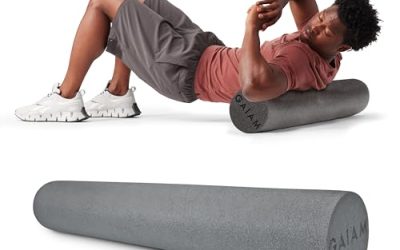
For back exercises, this long Gaiam roller is the natural starting point. Its 36-inch length runs the full length of the spine, so you can lie along it for upper-back work or across it for broader passes without the roller tipping. The medium density keeps pressure gentle enough for the back, while the hollow core keeps the roller light enough to move around the room. A digital workout included with the roller gives ideas for turning it into a regular routine.
Specs
- 36 inches long
- Medium density, also described as semi-firm
- Hollow core construction
- Includes a 15-minute digital workout
Best for: Back exercises and full-body routines where a long, medium roller supports the spine.
Watch out for: A 36-inch roller needs floor space, so measure your exercise area before ordering.
Gaiam Restore Textured 18-inch
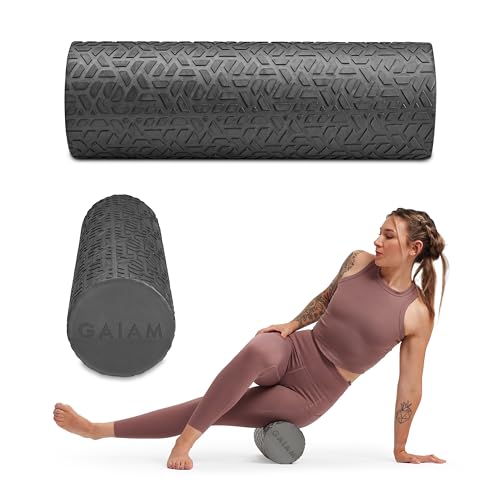
For leg and glute exercises, this 18-inch Gaiam roller covers a useful middle ground. It is long enough to roll both thighs in one pass, yet short enough to store on a shelf and carry to another room. The medium density suits the glutes and thighs without the harsh feel of an extra-firm roller, and the light texture helps the roller grip skin and clothing during slow passes. It suits people building a routine around the lower body.
Specs
- 18 inches long and about 6 inches in diameter
- Medium-density lightly textured surface
- Suits leg and glute exercises
- Compact enough for easy storage
Best for: Leg and glute exercises on a mid-length roller that stores easily.
Watch out for: Runners and lifters who want strong pressure on dense leg muscle may prefer a firmer roller from this guide.
TriggerPoint GRID 1.0 13-inch

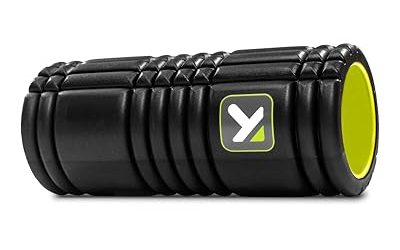
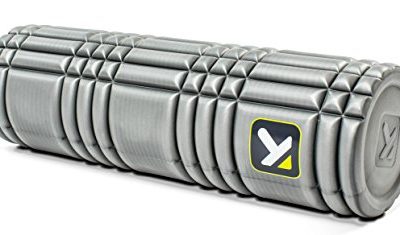
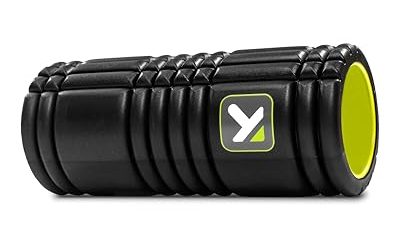
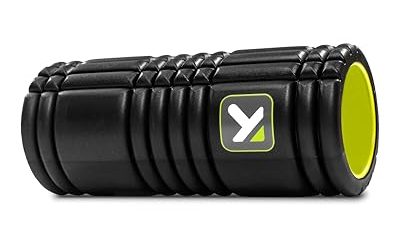
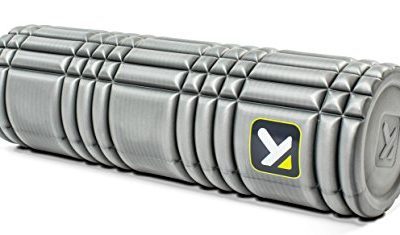
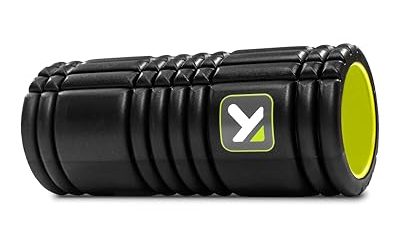
For calf and quad exercises, the compact GRID 1.0 gives firm pressure in a size that fits under a single leg. Its 13-inch length turns easily during calf passes and quad work, and the patterned surface offers varied pressure as you shift position. The rigid hollow core keeps the roller firm under body weight, which matters when you press a calf or a quad into it. Keep it by the door or in a gym bag and it is ready whenever you finish training.
Specs
- 13 inches long and 5.5 inches in diameter
- EVA foam over a rigid hollow core
- Multi-density GRID pattern on the surface
- Compact size for travel and gym bags
Best for: Calf and quad exercises where a short, firm roller gives focused pressure.
Watch out for: Check the listing for the 13-inch size before ordering, since this roller is also sold in other lengths.
LuxFit Speckled 12-inch
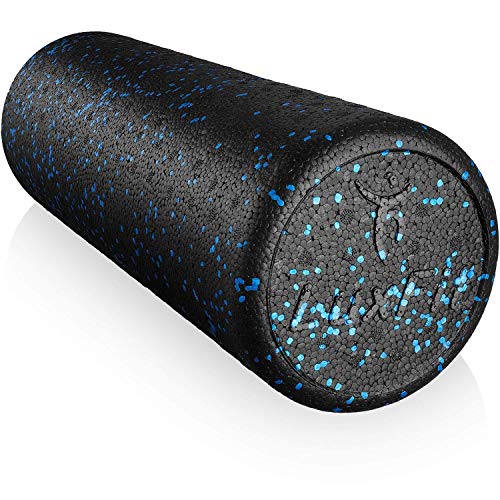
For targeted exercises on small or dense areas, this short LuxFit roller presses hard without taking up space. At 12 inches long it fits under a calf, beside a hip, or against a single glute, and the extra-firm molded core holds its shape under full body weight. It suits people who already own a long roller and want a second, firmer tool for spots the long roller cannot reach. Its size also makes it the easiest roller in this guide to store.
Specs
- 12 inches long and 6 inches in diameter
- Extra-firm molded polypropylene construction
- Density of 2 lb per cubic foot
- 3-year warranty stated on the listing
Best for: Targeted extra-firm exercises on calves, hips, and glutes in a small space.
Watch out for: Confirm the 12-inch size is selected on the listing, since the parent listing covers several sizes.
OPTP PRO-Roller Standard Density 36×4-inch

For spine work and narrow-area exercises, the slim OPTP roller does what wider rollers cannot. Its 36-inch length supports the back from shoulders to hips, while its 4-inch diameter settles beside the spine and into the calf and hip areas that a 6-inch roller skips. The standard density gives medium pressure, which suits longer sessions and people who roll daily. It pairs well with a short firm roller for a two-roller routine.
Specs
- 36 inches long and 4 inches in diameter
- Standard density, also described as medium density
- Closed-cell EVA foam construction
- Slim diameter for targeted rolling
Best for: Spine exercises and narrow-area work where a slim long roller reaches further.
Watch out for: The 4-inch diameter feels different from a standard roller, so try short passes first if you are used to a wider roller.
Which One Fits Your Situation
You Mainly Roll Your Back and Upper Body
Choose the Gaiam Restore Muscle Therapy 36-inch roller. Its full length supports the spine, its medium density spreads pressure gently across the back, and its hollow core keeps it light enough to reposition between exercises. The included digital workout also gives ideas for turning back work into a regular routine. Lie along it for upper-back work and across it for broader passes.
You Focus on Legs and Glutes After Training
Choose the Gaiam Restore Textured 18-inch roller. Its length covers both thighs at once, its medium density suits the glutes without feeling harsh, and its light texture keeps it steady during slow passes. Its 18-inch length also suits single-leg work when one side needs more attention than the other. It also stores easily between sessions.
You Want a Compact Roller for Core Work
Choose the TriggerPoint GRID 1.0 13-inch roller. Its firm hollow core and patterned surface give strong feedback during core and leg exercises, and its short length fits in a gym bag or beside a mat. The patterned surface also gives varied pressure as you shift position during each exercise. Use it for calves, quads, and core-adjacent work after training.
You Share One Roller Across a Whole Routine
Choose the OPTP PRO-Roller Standard Density 36×4-inch roller. Its long length covers the back and both legs, its slim diameter reaches narrow areas, and its medium density suits most body areas. Its standard density also suits longer daily sessions without the harsh feel of an extra-firm roller. Add the LuxFit 12-inch roller later if you want firmer pressure on small spots.
Common Mistakes
- Picking a roller by length alone and ignoring density and diameter.
- Rolling the lower back directly instead of working the upper back and glutes.
- Holding your breath and tensing up during slow passes.
- Using the same pressure on every body area, from calves to spine.
- Skipping a warm-up and rolling cold muscles with full body weight.
Frequently Asked Questions
Which roller length works best for back exercises?
A 36-inch roller works best for most back exercises, because it supports the spine from shoulders to hips and stays stable when you lie along it or across it. Shorter rollers can work for the upper back, but they tip more easily and cover less area. If you mainly roll your back, start with a long roller.
Can beginners use a firm foam roller?
Beginners can use a firm roller, but a medium-density roller is usually a better first choice. Medium rollers give enough pressure to feel the exercise without the sharp feel of an extra-firm surface. Start with short sessions and light body weight, then move to a firmer roller when medium pressure starts to feel too light.
How do I choose between a smooth and a textured roller?
Choose a textured roller if you want grip and varied pressure, since the pattern helps the roller stay in place during slow passes. Choose a smooth roller if you prefer an even glide and a simpler feel. For most people the difference is small, so let length and density decide first and treat texture as a secondary choice.
Should I roll before or after exercise?
Both can work, and the timing changes the approach. Before exercise, use light pressure and quick passes as part of a warm-up, then follow with normal movement. After exercise, use slower passes and lighter body weight, and spend more time on the muscles you worked hardest.
Related guides
More from Amazon
Programs that pair well with the guide above. Offers and eligibility are set by Amazon and may change.
Set up recurring deliveries of everyday items on eligible products. Terms and savings are set by Amazon.
Explore Subscribe & SaveFree shipping on eligible items, Prime Video and more. Eligible new members can start with a free trial.
Start a Prime free trialAudiobooks and podcasts to listen to on the go. Eligible new members can start with a free trial.
Try Audible freeRead from a large library of eBooks and audiobooks on any device. Check Amazon for current plans.
Explore Kindle UnlimitedAs an Amazon Associate we earn from qualifying purchases.
Write Your Review
No reviews yet. Be the first to share your experience!