
Key takeaways
- Compare five fingertip pulse oximeters, two reporting respiration rate, and learn how RRp is estimated, when readings count, and what to check first.
What's inside
As an Amazon Associate I earn from qualifying purchases. This post may contain affiliate links at no extra cost to you.
Most fingertip oximeters stop at two numbers: blood oxygen and pulse rate. The moment you also want a breathing rate, the field shrinks to a handful of models, and the real decision changes. You are no longer just comparing screens and battery types; you are deciding whether a respiration figure estimated from your pulse waveform is worth paying for, and whether you understand its limits well enough to trust it at the right moments and ignore it at the wrong ones.
This guide is for home users tracking recovery after illness, caregivers who want one more data point between check-ins, and anyone curious about breathing trends without wearing a chest strap. Every pick below comes from its Amazon product title and listing details. Only two of the five actually report a respiration rate, and the other three are included honestly as alternatives for readers who decide the breathing number is not essential after all.
Quick Picks
As an Amazon Associate we earn from qualifying purchases
| Product | Best for | Key spec from title |
|---|---|---|
| Masimo MightySat Fingertip Pulse Oximeter | The fullest fingertip measurement set | Respiration rate (RRp), perfusion index and pleth variability index over Bluetooth |
| Nestelle Rechargeable Fingertip Pulse Oximeter | A rechargeable checker that lists respiration rate | USB-C rechargeable with TFT display and respiration rate in the title |
| Innovo Deluxe iP900AP Fingertip Pulse Oximeter | Judging signal quality before trusting any number | Plethysmograph waveform and perfusion index with an audible alarm |
| Wellue O2Ring Pulse Oximeter | Overnight oxygen trends instead of spot checks | Ring sensor with continuous recording and app plus PC reports |
| CMI Health Rechargeable Pulse Oximeter (PC-66) | Alarm-based monitoring at the bedside or desk | Adjustable alarm with continuous monitoring and a carry case |
How to Choose
How a Fingertip Sensor Estimates Breathing Rate
No fingertip oximeter counts your breaths directly. Models that report respiration rate derive it from the plethysmograph, the pulse waveform the sensor already draws, because each breath subtly changes the shape and spacing of that waveform. Masimo calls its version RRp, respiration rate from the pleth, and the listing presents it in breaths per minute alongside oxygen saturation and pulse rate. Treat the figure as a calculated estimate rather than a counted measurement. It can be genuinely useful for spotting trends at rest, but it deserves more skepticism than the oxygen number, which the sensor measures more directly.
When a Resting Reading Actually Means Something
A respiration estimate is only meaningful when your body is close to still. Sit down, rest your hand on a table, breathe normally without thinking about it, and give the device time to settle before noting the number. Readings taken right after climbing stairs, during a conversation, or while you are deliberately breathing slowly for the sensor reflect that moment, not your baseline. If you plan to track the figure over days, take it at the same time, in the same position, under similar conditions, so changes reflect your breathing rather than your routine.
Why Motion and Cold Fingers Ruin the Number
Because the breathing rate is extracted from tiny variations in the pulse waveform, anything that disturbs that waveform disturbs the estimate first. A shifting finger, a tapping hand, or a sensor squeezed too tightly adds noise that the algorithm can mistake for breathing irregularities. Cold hands are just as damaging, since reduced blood flow weakens the signal before calculation even begins. Warm your hands, keep the sensor still, and check the perfusion index or waveform display where a model offers one. A weak, jagged signal means the respiration figure on screen should be ignored, not recorded.
When You Do Not Need the Breathing Number at All
Plenty of buyers search for respiration rate and then realize their actual question is different. If you want to know whether oxygen dips while you sleep, a recording ring that logs saturation and pulse through the night answers it better than a spot breathing estimate. If you need a warning when oxygen falls below a level you set, an adjustable alarm matters more than any derived rate. The three alternatives later in this guide cover those jobs. Choosing them is not settling; it is matching the tool to the question you are really asking.
The 5 Best Options
Masimo MightySat Fingertip Pulse Oximeter
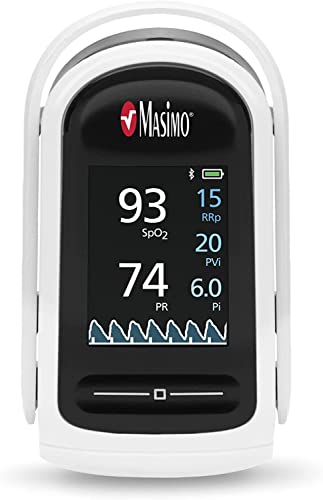
The MightySat is the clearest answer for buyers who genuinely want a respiration rate from a fingertip device. Its listing states that it measures oxygen saturation, pulse rate, and respiration rate in breaths per minute, labeled RRp because the figure is derived from the plethysmograph waveform rather than counted from chest movement. It adds perfusion index and pleth variability index, connects over Bluetooth, and shows everything on an OLED screen with a touchpad. For home users building a careful resting-breathing log, this is the most complete fingertip package in this guide.
Specs
- Measures SpO2, pulse rate, and respiration rate in breaths per minute (RRp)
- Also reports perfusion index and pleth variability index
- Bluetooth connectivity
- OLED screen with touchpad controls
- Runs on 2 AAA batteries
- Lanyard and soft pouch included
Best for: Buyers who want the breathing number plus signal-quality indexes from one fingertip sensor.
Watch out for: The respiration rate is an estimate from the pulse waveform, so only resting, motionless readings are worth recording.
ASIN: B00RT9RQXY
Nestelle Rechargeable Fingertip Pulse Oximeter

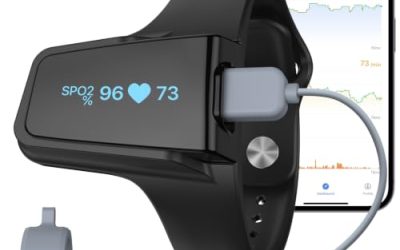
The Nestelle is the second model here whose title includes respiration rate, alongside oxygen saturation, pulse rate, and perfusion index. It swaps disposable batteries for USB-C recharging and uses a TFT display, which suits people who check themselves often and dislike buying cells. One honest caveat shapes who should buy it: the listing describes the device in terms of sports and aviation use rather than as a medical device. If you want a rechargeable everyday checker for fitness or altitude contexts and would like the breathing estimate included, it fits that role well.
Specs
- Reports SpO2, pulse rate, perfusion index, and respiration rate per the product title
- TFT display
- USB-C rechargeable battery
- Fingertip spot-check design
- Listing notes sports and aviation use
Best for: Active users who want a rechargeable checker with a respiration rate in the listed measurements.
Watch out for: The listing frames it for sports and aviation use, not as a medical device, so do not buy it for clinical monitoring.
ASIN: B0FVDQWQK1
Innovo Deluxe iP900AP Fingertip Pulse Oximeter

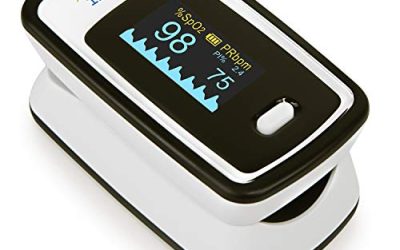
The Innovo Deluxe iP900AP does not report a respiration rate, and this guide will not pretend otherwise. Its value is as the waveform-quality comparison point: it shows a plethysmograph and perfusion index on an OLED screen readable in six directions, so you can see whether the underlying signal is clean before trusting any reading, including breathing estimates from other devices. It also includes an alarm, which the two respiration models above do not emphasize. If your household already owns a basic oximeter and you want better signal feedback and an audible warning, this is a sensible step.
Specs
- Plethysmograph waveform and perfusion index display
- Built-in alarm function
- OLED screen readable in six directions
- Fingertip spot-check design
- Does not report respiration rate
Best for: Buyers who want to judge signal quality on screen and gain an alarm.
Watch out for: There is no respiration rate here, so it cannot replace a model that lists one if that number is your priority.
ASIN: B07YVGZPRZ
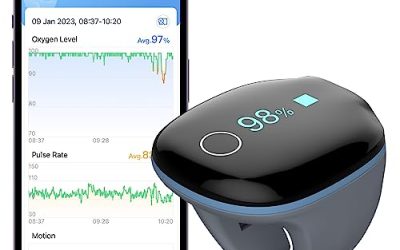
Wellue O2Ring Pulse Oximeter

The O2Ring takes a completely different approach: instead of a fingertip clip used for thirty-second checks, it is a ring worn for continuous recording of oxygen saturation and pulse rate, with results reviewed through app and PC reports. It does not report respiration rate either. What it offers instead is overnight trend context, showing whether saturation dips while you sleep, plus a vibration reminder when levels fall. For readers whose real concern is nighttime breathing patterns rather than a single resting breath count, that recorded trend is usually the more useful evidence.
Specs
- Ring-style sensor worn on the finger
- Continuous recording of SpO2 and pulse rate
- Vibration reminder during monitoring
- App and PC reports for reviewing sessions
- Does not report respiration rate
Best for: Sleep-focused users who want overnight oxygen trends rather than spot checks.
Watch out for: You review data afterwards in reports rather than watching a live breathing rate, and no respiration figure is provided.
ASIN: B08VW3VQKW
CMI Health Rechargeable Pulse Oximeter (PC-66)

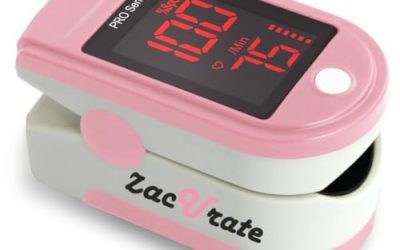
The CMI Health PC-66 is the alarm comparison point in this guide. It offers an adjustable alarm and continuous monitoring in a rechargeable fingertip unit that ships with a carry case, which makes it practical for a bedside table or a caregiver’s bag. It does not report respiration rate, so it belongs here for buyers who decide that being alerted when oxygen crosses a threshold they set matters more than seeing an estimated breath count. If your monitoring plan depends on a warning sound rather than manual note-taking, this is the model built around that plan.
Specs
- Adjustable alarm thresholds
- Continuous monitoring capability
- Rechargeable design
- Carry case included
- Does not report respiration rate
Best for: Caregivers and home users who want an audible alert during ongoing monitoring.
Watch out for: Continuous fingertip monitoring still needs the finger to stay still and warm, and there is no respiration rate readout.
ASIN: B07KGHKQHT
Which One Fits Your Situation
You Want the Breathing Number at Home
Choose the Masimo MightySat. It is the model here that lists respiration rate as a headline measurement, supports it with perfusion and pleth variability indexes that help you judge each reading, and sends data over Bluetooth for logging. Take readings seated and rested, and treat day-to-day trends as the signal rather than any single figure on the screen.
You Check Around Training or Travel
The Nestelle suits active routines: it is rechargeable over USB-C, lists respiration rate among its measurements, and its own listing positions it for sports and aviation use. That framing matches gym bags and flight kits honestly. Just keep expectations aligned with the listing, and do not treat it as a substitute for a medical device if a clinician is monitoring your breathing.
Your Concern Is What Happens Overnight
Pick the Wellue O2Ring. A thirty-second fingertip check before bed cannot show whether your oxygen dips at three in the morning, but a ring that records saturation and pulse continuously, vibrates as a reminder, and produces app and PC reports can. It gives no respiration rate, yet the overnight trend usually answers the question that sent you shopping in the first place.
You Need a Warning More Than a Number
Either alarm model fits, depending on how you monitor. The Innovo Deluxe adds an alarm to a strong waveform display for spot checks, while the CMI Health PC-66 pairs an adjustable alarm with continuous monitoring and a carry case. Choose based on whether your routine is occasional checks with a safety net or longer watched sessions where an alert does the watching.
Common Mistakes
- Assuming every oximeter reports respiration rate, when most fingertip models show only oxygen saturation and pulse rate.
- Recording the breathing figure while walking, talking, or just after exercise, when the estimate is least reliable.
- Treating a derived respiration rate as a counted medical measurement instead of a resting trend indicator.
- Ignoring a weak waveform or low perfusion reading and trusting numbers the sensor could not support.
- Buying a sports and aviation device for clinical monitoring duties its listing never claims.
Frequently Asked Questions
How does a fingertip oximeter calculate respiration rate?
It derives the rate from the plethysmograph, the pulse waveform the sensor already records. Breathing subtly alters that waveform’s shape and rhythm, and the device converts those changes into breaths per minute. Masimo labels its version RRp, respiration rate from the pleth. Because the figure is calculated rather than counted, it is best used as a resting estimate and a trend over time.
Is the respiration rate from an oximeter accurate enough to rely on?
At rest, with warm hands and a still finger, it can track your breathing pattern closely enough for home trend-spotting. During movement, conversation, or poor circulation, the estimate degrades quickly because it depends on a clean pulse waveform. It is not a replacement for clinical respiratory monitoring, and any worrying symptoms deserve medical attention regardless of what a home device displays.
Why do most pulse oximeters not show respiration rate?
Deriving a breathing rate from the pulse waveform requires extra processing and careful signal handling, so most manufacturers keep fingertip models focused on oxygen saturation and pulse rate, which the sensor measures more directly. That is why only two products in this guide list respiration rate, while well-regarded alternatives concentrate on waveform quality, alarms, or continuous overnight recording instead.
Can I use a respiration-rate oximeter to monitor breathing overnight?
A fingertip spot-check model is poorly suited to sleep, since the clip must stay still on your finger and only captures moments. For overnight questions, a recording ring such as the Wellue O2Ring tracks oxygen and pulse continuously and reports trends afterwards. It gives no respiration rate, but its recorded pattern is more informative than a single bedtime breathing estimate.
Related guides
More from Amazon
Programs that pair well with the guide above. Offers and eligibility are set by Amazon and may change.
Set up recurring deliveries of everyday items on eligible products. Terms and savings are set by Amazon.
Explore Subscribe & SaveFree shipping on eligible items, Prime Video and more. Eligible new members can start with a free trial.
Start a Prime free trialAudiobooks and podcasts to listen to on the go. Eligible new members can start with a free trial.
Try Audible freeRead from a large library of eBooks and audiobooks on any device. Check Amazon for current plans.
Explore Kindle UnlimitedAs an Amazon Associate we earn from qualifying purchases.
Write Your Review
No reviews yet. Be the first to share your experience!