
Key takeaways
- Judge pulse oximeter value in Bangladesh without chasing the lowest tag: alarms, waveforms, brand support, counterfeit checks and battery costs explained.
What's inside
As an Amazon Associate I earn from qualifying purchases. This post may contain affiliate links at no extra cost to you.
Judging value in Bangladesh is not a matter of finding the smallest number attached to a fingertip oximeter. Counterfeit units copy trusted shells, arrive with weak sensors, and leave buyers with numbers nobody can rely on when a parent feels breathless at night. The real decision is which features earn their keep: an alarm a caregiver can hear, a waveform that shows a clean signal, and a brand whose support can actually be reached afterwards.
This guide is for families buying one device for home use, caregivers who need alerts during longer checks, and shoppers comparing a basic clamp against a recording ring. Each pick is drawn from its Amazon product title and listing details. Several models are positioned for personal tracking rather than medical monitoring, and the notes below say so openly instead of dressing home readings up as clinical evidence.
Quick Picks
As an Amazon Associate we earn from qualifying purchases
| Product | Best for | Key spec from title |
|---|---|---|
| Zacurate Pro Series 500DL | Simple spot checks with protective extras included | LED display with silicone cover, batteries and lanyard included |
| Innovo Deluxe iP900AP | Buyers paying for an alarm and signal detail | Alarm, plethysmograph and perfusion index on an OLED display |
| CMI Health Rechargeable (PC-66) | Avoiding repeated battery purchases | Rechargeable with adjustable alarm, case and AC adapter included |
| Wellue O2Ring | Overnight recording without a clamp | Ring design with vibration reminder and continuous recording |
| Masimo MightySat | The widest set of fingertip measurements | Respiration rate (RRp), perfusion index and pleth variability index |
How to Choose
Decide which features justify paying more
A basic fingertip unit answers one question quickly, and for many homes that is enough. Money starts earning its return when a feature solves a real problem in your routine: an alarm matters if a caregiver cannot watch the screen, a plethysmograph matters if weak signals keep producing doubtful numbers, and continuous recording matters if the concern happens during sleep. Brand support matters after the purchase, when a strap breaks or readings drift. List the problem first, then let that problem decide which tier makes sense.
Spot counterfeit fingertip units before paying
Copies imitate the shell, the box art and even the brand font, so inspect the details a copy usually gets wrong. Ask the seller to state the exact model name, what is included in the box, and what warranty or return route applies if the sensor reads erratically. Compare those answers with the genuine listing: included covers, cases or adapters should match. A seller who cannot name the model, or who swaps accessories between answers, is telling you the unit’s readings deserve the same doubt.
Count the running cost, not just the purchase
Ownership costs continue quietly after checkout. A fingertip unit fed with disposable batteries needs fresh cells bought again and again, and cheap cells run down fast in warm storage. A rechargeable model shifts that cost into electricity and one adapter that must not be lost, while a ring with a rated battery life suits households that record often. Before choosing, picture a full year of your actual routine: daily spot checks, weekly overnight recordings, or long recovery sessions, then pick the power arrangement that fits it.
Ask a local seller the awkward questions first
A good seller answers specifics without steering you to whatever sits on the shelf. Ask which brand stands behind the unit, how a faulty sensor would be handled, whether the alarm and display directions work as the listing describes, and whether the box contents match the genuine product page. Ask, too, whether the model is intended for home tracking or aimed at sports and aviation users. Vague answers are useful information: they mark the point where walking away protects both your money and your family’s readings.
The 5 Best Options
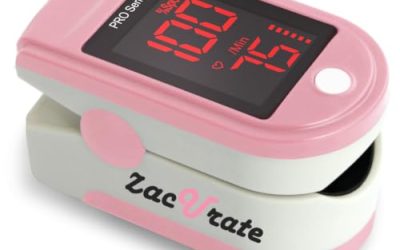
Zacurate Pro Series 500DL

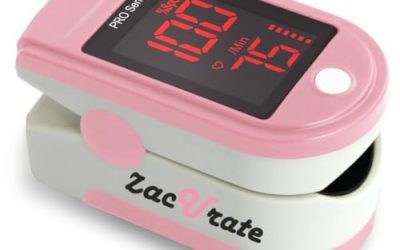
This is the sensible starting point for a household that wants quick spot checks without accessories to hunt down separately. The listing includes batteries, a silicone cover and a lanyard alongside the LED display, so the box contents themselves are part of the value. Its simplicity suits families checking an older relative once or twice a day. Read the positioning carefully, though: the listing presents this model for sports and aviation use, so treat its numbers as personal tracking information, not as output from a medical device.
Specs
- LED display
- Silicone cover included
- Batteries included
- Lanyard included
- Positioned for sports and aviation use per listing
Best for: First-time buyers who want a complete, simple fingertip kit in one box.
Watch out for: Counterfeit shells copy this style closely, so verify the model name and box contents with the seller.
Innovo Deluxe iP900AP

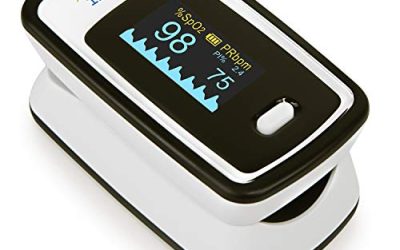
Stepping up buys information, not just a brighter screen. The Deluxe adds an alarm, a plethysmograph and a perfusion index to the usual pair of numbers, and its OLED display turns through six directions for whoever is reading it. That combination helps a caregiver judge whether a reading rests on a clean pulse signal before acting on it. For a Bangladeshi family sharing one device between homes, those verification tools and the alarm are the features that can justify choosing this tier over a basic clamp.
Specs
- Alarm
- Plethysmograph
- Perfusion index
- OLED display
- Six display directions
Best for: Caregivers who want an alarm plus visible signal quality during home checks.
Watch out for: Ask the seller to confirm the alarm settings and display directions work as the listing describes.
CMI Health Rechargeable (PC-66)

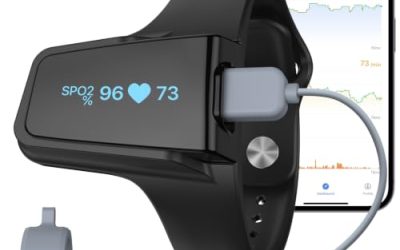
The value argument here is about what you stop buying. This unit is rechargeable, with an AC adapter and carry case included, so its running cost does not depend on a steady supply of small batteries. It supports both continuous monitoring and ordinary spot-checking, and the adjustable alarm suits longer sessions where someone is resting and nobody wants to stare at a screen. For households checking readings daily over months, that combination of alarm coverage and rechargeable power is where its higher tier pays for itself.
Specs
- Rechargeable
- Adjustable alarm
- Continuous monitoring and spot-checking
- Carry case included
- AC adapter included
Best for: Daily home monitoring where disposable battery costs would keep adding up.
Watch out for: Keep the adapter stored with the case; a rechargeable unit with a lost charger has no value at all.
Wellue O2Ring

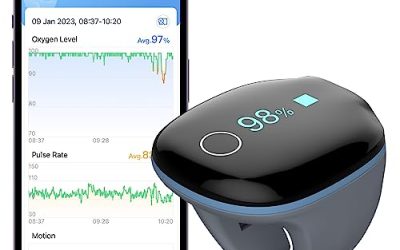
Overnight recording is the one job a fingertip clamp does badly, and that gap is what this ring charges for. It records continuously while worn as a ring, vibrates as a reminder instead of relying on sound alone, and sends results over Bluetooth to app and PC reports for review the next day. The listing rates its battery at sixteen hours. Families investigating night-time breathing concerns get a record worth discussing with a doctor, which is a different and more defensible purchase than a clamp used hopefully during sleep.
Specs
- Ring design
- Vibration reminder
- Bluetooth
- Continuous recording
- App and PC reports
- 16-hour battery
Best for: Overnight trend recording to review later or share with a clinician.
Watch out for: Check the fit and sizing information on the listing, since a loose ring records poorly.
Masimo MightySat
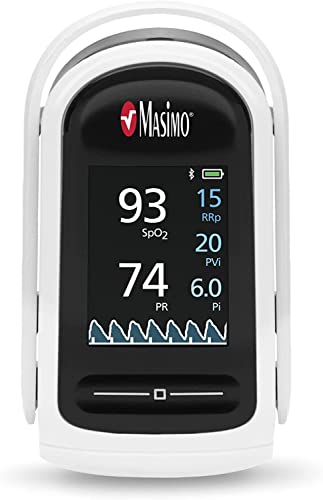
At the top of this list sits the fingertip unit with the broadest measurement set. The listing names oxygen saturation, pulse rate, respiration rate, perfusion index and pleth variability index, delivered through an OLED display with touchpad controls and Bluetooth. It runs on AAA batteries and includes a pouch. That breadth only represents value for a household guided to watch several measures at once; a family needing one daily number would be paying for indexes nobody opens, which is its own kind of waste.
Specs
- Bluetooth
- Measures SpO2 and pulse rate
- Respiration rate (RRp)
- Perfusion index
- Pleth variability index
- OLED display with touchpad
- AAA batteries
- Pouch included
Best for: Households following professional advice to track several respiratory measures together.
Watch out for: Budget for replacement AAA batteries across the year, since this model is not rechargeable.
Which One Fits Your Situation
One device for occasional checks on a tight budget
Start with the Zacurate Pro Series 500DL and spend your effort on authenticity instead of features. Its included batteries, cover and lanyard mean no extra purchases before the first reading. Ask the seller to confirm the exact model and box contents, and remember its sports and aviation positioning: it is a personal tracker for home awareness, not a medical instrument.
A caregiver who cannot watch the screen all day
Choose between the Innovo Deluxe iP900AP and the CMI Health PC-66, both of which bring an alarm into the routine. The Innovo adds a waveform and perfusion index for judging signal quality, while the rechargeable CMI removes battery buying during long recoveries. Decide by session length: shorter supervised checks favour the Innovo, daily extended monitoring favours the CMI.
Night-time readings are the whole reason for buying
Buy the Wellue O2Ring rather than stretching a clamp beyond its design. It stays worn, records continuously and vibrates quietly, then produces app and PC reports you can review calmly in the morning. Treat those reports as material for a medical consultation. A home ring documents patterns; it does not diagnose the cause behind them.
A clinician suggested watching respiration as well
Look at the Masimo MightySat, the only fingertip model here whose listing includes respiration rate alongside saturation, pulse rate and signal indexes. Its pouch and familiar AAA batteries keep it easy to carry between a home and a clinic visit. Confirm with the clinician which readings they actually want recorded, so you track what matters instead of everything available.
Common Mistakes
- Choosing by the lowest tag alone and ending up with a counterfeit unit whose sensor cannot be trusted.
- Paying for alarms, waveforms and extra indexes that nobody in the household will ever use.
- Forgetting the year-long cost of disposable batteries when comparing a basic clamp with a rechargeable model.
- Accepting a seller’s verbal assurance instead of checking the model name, box contents and warranty route in writing.
- Using a home tracker, including sports and aviation positioned models, as if it were supervised medical monitoring.
Frequently Asked Questions
Which features are actually worth paying more for?
An alarm earns its place when a caregiver cannot watch the screen continuously, and a plethysmograph with perfusion index earns its place when weak signals make readings doubtful. Continuous recording matters only for overnight or long-session use. Brand support matters after purchase. Features outside your routine add cost without adding confidence, so match the tier to the problem you actually have.
How do I avoid a counterfeit fingertip oximeter in Bangladesh?
Ask the seller for the exact model name, the full box contents and the warranty or return arrangement, then compare those answers against the genuine product listing. Included items such as a silicone cover, carry case or AC adapter should match precisely. Sellers who answer vaguely, substitute accessories or cannot name the brand behind the unit should be avoided.
Is rechargeable or battery power cheaper to live with?
For occasional spot checks, a battery model is simple and its cells last a long time. For daily monitoring or frequent overnight recording, a rechargeable unit usually works out better because it removes repeated battery purchases, provided its adapter stays with the case. The honest comparison is your routine over a full year, not the day of purchase.
Can these home oximeters replace medical monitoring?
No. These are personal tracking devices for home use, and some listings position their models for sports and aviation rather than medical care. They help you notice patterns and decide when to seek professional help. Diagnosis, treatment decisions and continuous supervised monitoring belong to clinicians and medical equipment, not to a fingertip clamp or a recording ring.
Related guides
More from Amazon
Programs that pair well with the guide above. Offers and eligibility are set by Amazon and may change.
Set up recurring deliveries of everyday items on eligible products. Terms and savings are set by Amazon.
Explore Subscribe & SaveFree shipping on eligible items, Prime Video and more. Eligible new members can start with a free trial.
Start a Prime free trialAudiobooks and podcasts to listen to on the go. Eligible new members can start with a free trial.
Try Audible freeRead from a large library of eBooks and audiobooks on any device. Check Amazon for current plans.
Explore Kindle UnlimitedAs an Amazon Associate we earn from qualifying purchases.
Write Your Review
No reviews yet. Be the first to share your experience!