
Key takeaways
- Compare fingertip and wearable pulse oximeters by display, perfusion index, alarms and tracking, with honest notes on what each model does at home.
What's inside
As an Amazon Associate I earn from qualifying purchases. This post may contain affiliate links at no extra cost to you.
The real decision with a pulse oximeter is not the brand name on the clip. It is whether you need a ten-second spot check — after a run, during a chest infection, when you feel breathless — or a record that runs for hours while you sleep. Those are different tools. A fingertip clip answers the first job well and cannot do the second, however good its screen looks. Choosing the wrong format is the most common way buyers end up disappointed.
This guide is for home users checking their own readings, people who want overnight trend data, and family members watching an older relative. The five picks below were chosen from their Amazon product titles and listings, which state what each device measures and how it is powered. One caution runs through the list: several of these devices are positioned by their makers for sports and aviation use and are not medical devices, so treat them as tracking tools, not as a replacement for a clinician.
Quick Picks
As an Amazon Associate we earn from qualifying purchases.
| Product | Best for | Key spec from title |
|---|---|---|
| Zacurate Pro Series 500DL | Quick spot checks at home or after exercise | LED display, reads SpO2 up to 100 percent |
| Innovo Deluxe iP900AP | Buyers who want an alarm plus a waveform | Plethysmograph and perfusion index, OLED screen |
| Wellue O2Ring | Overnight and continuous tracking | Wearable ring, 16-hour battery, app and PC reports |
| Masimo MightySat | Extra parameters beyond SpO2 and pulse | Respiration rate, perfusion index, pleth variability index |
| CMI Health Rechargeable | Adjustable alarms with continuous monitoring | Alarm for SpO2 and pulse rate, carry case included |
How to Choose
Fingertip Spot Checks or Wearable Tracking
Start with the job, because the two formats barely overlap. A fingertip clip such as the Zacurate 500DL or the Innovo iP900AP gives you a reading in seconds, then goes back in a drawer. It cannot follow you through the night. A wearable such as the Wellue O2Ring records SpO2 and pulse rate continuously and turns the data into app and PC reports. If your question is “what is my oxygen right now,” buy the clip. If your question is “what happens while I sleep,” only the wearable format answers it.
Reading the Display in Real Conditions
You will read this screen in dim bedrooms, bright kitchens and shaky hands, so display type matters more than it sounds. The Zacurate uses an LED display, bright and simple. The Innovo and the Masimo use OLED screens; the Innovo rotates through six display directions, which helps when someone else is reading the screen across from you, and the Masimo adds a touchpad instead of buttons. Check how the numbers are oriented and sized on the listing photos, because a screen you cannot read at arm’s length makes every other feature pointless.
Perfusion Index as a Signal-Quality Check
Cold fingers, poor circulation and a loose clip all produce readings you should not trust, and perfusion index is the number that warns you. It reflects the strength of the pulse signal the sensor is actually seeing, so a very low value tells you to warm your hands and reseat the device before believing the SpO2 figure. The Innovo iP900AP, the Masimo MightySat and the Nestelle-style fingertip units in this category show perfusion index alongside SpO2. If you have chronically cold hands, treat perfusion index as a required feature, not a bonus.
Alarms, Apps and the Medical-Device Line
Alarms and apps sound similar but solve different problems. An alarm, on the Innovo or the CMI Health unit, reacts in the moment when SpO2 or pulse rate crosses a limit you set. An app, on the Wellue models, shows you the pattern afterwards. Neither turns a consumer device into medical monitoring. Several listings in this category state plainly that the device is intended for sports and aviation use and is not a medical device. Use the numbers to decide when to seek proper care, never as a reason to delay it.
The 5 Best Options
Zacurate Pro Series 500DL

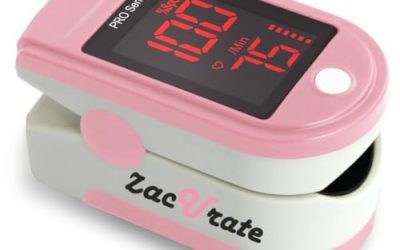
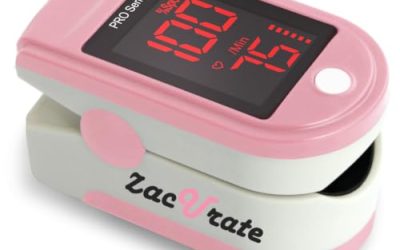
This is the straightforward fingertip clip for people who want a number, not a project. You put it on, read the LED display, and put it away, which suits post-exercise checks, travel kits and the drawer by the bed. The Blushing Pink listing includes a silicone cover plus batteries and a lanyard, so it arrives ready to use and easy to carry without scratching. Zacurate positions this model for sports and aviation use, and that framing is honest: it is a quick spot-check tool for generally healthy users, not a monitor for a diagnosed condition.
Specs
- LED display
- Reads SpO2 up to 100 percent per listing
- Silicone cover included
- Batteries and lanyard included
- Positioned for sports and aviation use per listing
Best for: Healthy home users who want fast, occasional spot checks.
Watch out for: It only spot-checks; there is no alarm, no app and no overnight recording.
ASIN: B06XHTXD7S
Innovo Deluxe iP900AP

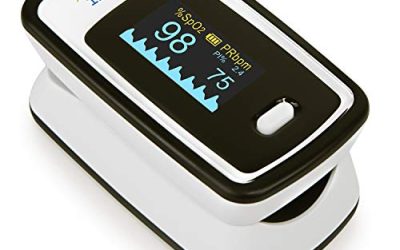
The Innovo suits buyers who find a bare SpO2 number too thin and want context with it. Its screen shows a plethysmograph waveform and perfusion index next to the reading, so you can see whether the signal looks steady before you trust the figure, and an alarm feature flags values outside the range you set. The OLED screen rotates through six display directions, handy when a partner or carer reads it from the other side. The honest limit sits in the listing’s own answers: despite the alarm, this unit cannot monitor overnight, so it remains a spot-check device with better feedback.
Specs
- Alarm feature
- Plethysmograph and perfusion index
- OLED screen with six display directions
- Listing Q&A states it cannot monitor overnight
Best for: Users who want a waveform, perfusion index and an alarm in a fingertip unit.
Watch out for: The alarm does not make it an overnight monitor; the listing itself rules that use out.
ASIN: B07YVGZPRZ
Wellue O2Ring

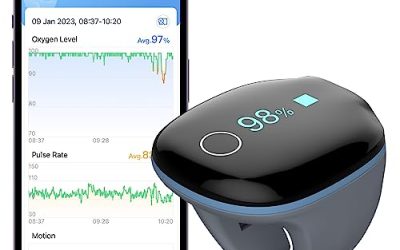
The O2Ring is the pick for people whose real question is what happens over hours, especially during sleep. Instead of a clip you hold still, it is a ring you wear, recording SpO2 and pulse rate continuously while a vibration reminder nudges you when levels shift. Bluetooth sends the record to a free app, and PC reports let you save or share a night’s data as a file rather than a screenshot. The rechargeable battery runs 16 hours per the listing, covering a full night with room to spare. It is a tracking tool for spotting patterns, not a medical monitor.
Specs
- Wearable ring design
- Vibration reminder
- Bluetooth
- Rechargeable
- Continuous recording of SpO2 and pulse rate
- Free app and PC reports
- 16-hour battery
Best for: Sleep tracking and anyone who wants continuous records instead of single readings.
Watch out for: You need the app or PC software to get value from it; the ring alone shows little.
ASIN: B08VW3VQKW
Masimo MightySat
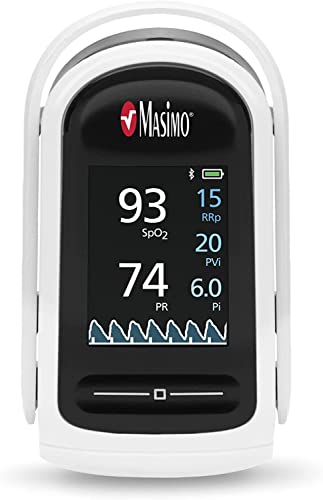
Masimo built its name on hospital signal processing, and the MightySat is the consumer fingertip unit carrying that heritage. Beyond SpO2 and pulse rate it measures respiration rate in breaths per minute, labelled RRp, plus perfusion index and pleth variability index, a parameter set no basic clip in this list matches. Readings appear on an OLED screen worked by a touchpad, and Bluetooth is built in. It runs on two AAA batteries and ships with a lanyard and pouch. Buy it if the extra parameters genuinely interest you and you will actually look at them; casual users will not miss what they never check.
Specs
- Bluetooth
- Measures SpO2, pulse rate, respiration rate (RRp), perfusion index and pleth variability index
- OLED screen
- Touchpad controls
- Runs on 2 AAA batteries
- Lanyard and pouch included
Best for: Data-focused users who want respiration rate and pleth variability alongside SpO2.
Watch out for: Extra parameters only help if you understand them; it is still a spot-check fingertip device.
ASIN: B00RT9RQXY
CMI Health Rechargeable

The CMI Health unit is built around one idea: an alarm you can adjust. You can set limits for both SpO2 and pulse rate, and the device supports continuous monitoring as well as spot-checking, which makes it the fingertip option here for a carer who wants a warning rather than a log file. It is rechargeable, so there are no batteries to swap, and the listing includes a carry case and an AC adapter, a small detail that matters if the device travels between rooms or houses. Check the alarm-setting steps in the listing before buying, since you will use them from day one.
Specs
- Adjustable alarm for SpO2 and pulse rate
- Continuous monitoring and spot-checking
- Rechargeable
- Carry case and AC adapter included
Best for: Carers and home users who want settable alarms without a wearable.
Watch out for: Confirm how alarms are set and silenced in the listing; that workflow is the whole point of this model.
ASIN: B07KGHKQHT
Which One Fits Your Situation
You Just Want a Number After Exercise or Illness
Buy the Zacurate Pro Series 500DL. Your use is a ten-second check a few times a week, and the other models’ waveforms, apps and extra parameters would sit unused. The Zacurate reads SpO2 on an LED display, comes with batteries, a lanyard and a silicone cover, and asks nothing of you between readings. Keep its sports and aviation positioning in mind: it is a wellness spot check, and a worrying reading belongs in front of a clinician.
You Want Overnight Trends, Not Single Readings
Buy the Wellue O2Ring. It is the only pick here designed to record SpO2 and pulse rate continuously for hours, with a 16-hour battery, a vibration reminder and app plus PC reports that turn a night into something you can review. The Innovo, despite its alarm, is ruled out for this job by its own listing. Treat the ring’s reports as trend information to discuss with a doctor, especially if the pattern repeats across several nights.
You Care for Someone and Need a Warning
Look at the CMI Health Rechargeable first, with the Innovo Deluxe iP900AP as the alternative. The CMI lets you set alarm limits for SpO2 and pulse rate and supports continuous monitoring, and it arrives with a case and AC adapter for moving between rooms. The Innovo adds a waveform and perfusion index, which helps you judge a reading on the spot. Neither replaces proper supervision or medical monitoring for someone with a diagnosed condition.
You Want More Than SpO2 and Pulse
Buy the Masimo MightySat. It is the only fingertip pick here that adds respiration rate, and it layers perfusion index and pleth variability index on top of the usual SpO2 and pulse rate. That suits users tracking recovery or training who already know what those numbers mean. If those terms mean nothing to you today, save the complexity and buy the Zacurate or the Innovo instead; unused parameters are just a busier screen.
Common Mistakes
- Buying a fingertip clip for overnight monitoring, when only a wearable records continuously for hours.
- Trusting a reading taken with cold hands or a loose fit instead of checking the perfusion index first.
- Treating a sports and aviation device as a medical monitor and delaying proper care because the number looked fine.
- Paying for extra parameters such as pleth variability index without knowing what they mean or ever reviewing them.
- Ignoring what the listing itself rules out, such as the Innovo’s own note that it cannot monitor overnight.
Frequently Asked Questions
Is a home pulse oximeter a medical device?
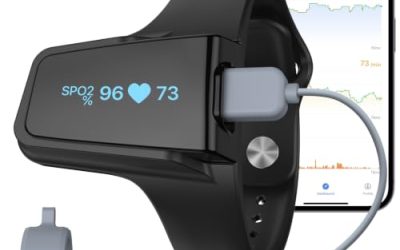
Usually not, and the listings say so themselves. Several models here, including the Wellue wrist unit and the Nestelle fingertip unit in this category, are described by their sellers as intended for sports and aviation use and not medical devices. Treat home readings as wellness information and trend tracking. A diagnosis, a treatment change or a worrying symptom needs a clinician and medical-grade equipment, not a consumer clip.
Why does my reading jump around between checks?
Movement, cold fingers and a weak pulse signal are the usual causes. Perfusion index exists partly to expose this: a low value means the sensor is struggling, so the SpO2 figure on screen deserves suspicion. Warm your hands, sit still, reseat the device snugly, and take two or three readings a minute apart. If the numbers stay inconsistent across devices and conditions, raise that pattern with a doctor.
Can a fingertip oximeter monitor me while I sleep?
A basic clip cannot, because it reads only while your finger sits inside it and stores nothing. The Innovo’s listing answers this directly: it cannot monitor overnight, alarm or not. Sleep tracking needs a wearable such as the Wellue O2Ring, which records SpO2 and pulse rate for hours and produces app and PC reports. Even then, it is trend data for discussion with a clinician, not a medical sleep study.
What does perfusion index actually tell me?
It tells you how strong the pulse signal is at the measurement site, which is a statement about reading quality. A steady value means the sensor sees a clean signal and the SpO2 number is more believable. A very low value usually points to cold hands, poor circulation or a bad fit. Use it as a trust check on every reading rather than a health metric.
Related guides
More from Amazon
Programs that pair well with the guide above. Offers and eligibility are set by Amazon and may change.
Set up recurring deliveries of everyday items on eligible products. Terms and savings are set by Amazon.
Explore Subscribe & SaveFree shipping on eligible items, Prime Video and more. Eligible new members can start with a free trial.
Start a Prime free trialAudiobooks and podcasts to listen to on the go. Eligible new members can start with a free trial.
Try Audible freeRead from a large library of eBooks and audiobooks on any device. Check Amazon for current plans.
Explore Kindle UnlimitedAs an Amazon Associate we earn from qualifying purchases.
Write Your Review
No reviews yet. Be the first to share your experience!