
Key takeaways
- Compare five overnight pulse oximeters with vibration or audible reminders, adjustable alarm limits and reports you can review the next morning.
What's inside
As an Amazon Associate I earn from qualifying purchases. This post may contain affiliate links at no extra cost to you.
An overnight oximeter without any reminder simply records; one with an alarm can also nudge you in the moment. The real decision is how that nudge should arrive. A vibration on your finger wakes one person quietly, while an audible alarm fills the room and may be exactly what a heavier sleeper, or a partner listening from the other side of the bed, actually needs. Choosing the wrong type means either sleeping through every alert or being woken ten times a night.
This guide is for people asked to watch for overnight oxygen dips, partners who want a prompt they can respond to, and anyone comparing ring, wrist, and monitor-style devices with reminders. The picks below come from Amazon product titles and listings for wearable oximeters with vibration or audible alerts and continuous overnight recording, and the alarm style of each one is stated plainly so you can match it to your household.
Quick Picks
As an Amazon Associate we earn from qualifying purchases.
| Product | Best for | Key spec from title |
|---|---|---|
| Wellue O2Ring | A silent nudge that wakes only the wearer | Vibration reminder |
| Wellue Wrist Checkme O2 Max | Sound-based alerts across long tracking stretches | Audio reminder with 72-hour battery life |
| Wellue Checkme O2 Ultra Wrist | An audible reminder with the longest endurance | Audible reminder with 100-hour endurance |
| CMI Health Rechargeable PC-66 | Setting your own alarm limits | Adjustable alarm for SpO2 and pulse rate |
| Wellue O2Ring-S | Alarm coverage across several stored nights | Built-in memory for four 10-hour sessions |
How to Choose
Vibration on the finger versus an audible alarm
This is the defining choice in this category. A ring that vibrates alerts the wearer and nobody else, which protects a partner’s sleep and works well if you respond to a light touch. An audible reminder from a wrist or monitor unit is harder to sleep through and lets someone else in the room react, but it can startle, and it disturbs everyone nearby. Be honest about how deeply you sleep: the discreet option is useless if it never wakes you, and the loud option is miserable if a whisper would have done.
Adjustable thresholds beat fixed ones
An alarm is only as sensible as the limit that triggers it. Adjustable thresholds, like the CMI Health unit’s alarm for SpO2 and pulse rate, let you set the trigger level rather than accepting whatever a factory chose. Where a listing does not spell out how its reminder limits are set, check the product page and app description before buying. The right limit is a personal one, ideally agreed with a clinician who knows your history, because a threshold copied from a stranger’s forum post can be far too tight or too loose for you.
Alarm fatigue is a real failure mode
Set the limit too tight and the device will nudge or sound so often that you start ignoring it, muting it, or leaving it in a drawer, which quietly ends the whole exercise. Frequent alerts are also information: they may mean the threshold is wrong for you, the sensor fit is poor, or something genuinely needs medical attention. Treat repeated alarms as a reason to review the settings and the recorded reports with a clinician, not as background noise to train yourself to sleep through night after night.
The recording behind the alarm still matters
An alert at 3 a.m. tells you something happened; the overnight record tells you how often, how long, and whether it forms a pattern. Prefer devices that pair their reminder with continuous recording plus app or PC reports, so an alarm becomes the start of a review rather than a forgotten beep. Battery life matters here too, because an alarm cannot trigger on a device that went flat at midnight. The options below combine reminders with recording, and their stated endurance ranges from a full night to well over a week of nights.
The 5 Best Options
Wellue O2Ring

The O2Ring is the discreet end of this category: a ring that records SpO2 and pulse rate continuously and vibrates on your finger when a reminder triggers, waking the wearer without a sound in the room. Bluetooth feeds app and PC reports, so a night’s alerts can be reviewed against the full recording in the morning. It is rechargeable, with a 16-hour battery that covers a night comfortably. For couples where one partner sleeps lightly and the other needs the monitoring, this division of labour is the whole point.
Specs
- Ring design
- Vibration reminder
- Bluetooth
- Rechargeable
- Continuous recording of SpO2 and pulse rate
- App and PC reports
- 16-hour battery
Best for: Waking only the wearer, quietly.
Watch out for: Very deep sleepers may not respond to vibration alone, so consider an audible model if that is you.
ASIN: B08VW3VQKW
Wellue Wrist Checkme O2 Max
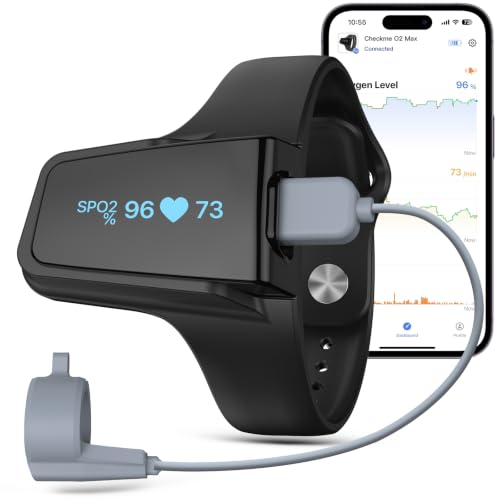
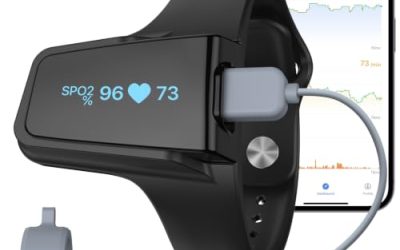
This wrist unit pairs an audio reminder with the stamina to keep it available night after night: 72-hour battery life and continuous SpO2 tracking mean the alert function is still alive on night four, not just night one. Bluetooth connects it to app and PC reports for reviewing what triggered each reminder. The listing notes the device is not a medical device, so its alerts are wellness prompts to act on thoughtfully and discuss with a clinician, not medical alarms, and the overnight record is personal tracking rather than monitored care.
Specs
- Audio reminder
- Bluetooth
- Continuous SpO2 tracking
- 72-hour battery life
- App and PC reports
- Listing notes it is not a medical device
Best for: Audible alerts that stay available across many nights.
Watch out for: An audio reminder wakes the room, so partners who sleep lightly should agree to the arrangement first.
ASIN: B0DMZQ15BB
Wellue Checkme O2 Ultra Wrist
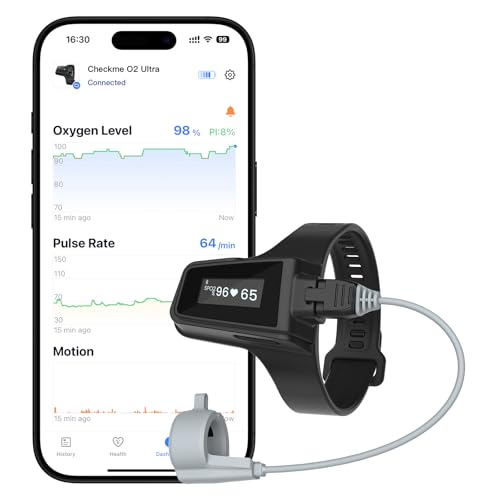
The Checkme O2 Ultra is built around endurance: its audible reminder sits on top of 100-hour endurance, the longest figure in this guide, so the alarm you rely on is not defeated by a forgotten charge. It is rechargeable and comes with free PC software and an app for reviewing sessions and the moments that triggered alerts. For households that want a sound-based prompt and a tracking routine that survives busy weeks, travel, and general forgetfulness, this is the low-maintenance way to get both.
Specs
- 100-hour endurance
- Audible reminder
- Rechargeable
- Free PC software and app
Best for: A sound-based alert with the least charging.
Watch out for: Check the listing for how reminder limits are adjusted, since the headline details focus on endurance and the reminder itself.
ASIN: B0DN115TGB
CMI Health Rechargeable PC-66

The PC-66 is the control-focused pick: its alarm for SpO2 and pulse rate is adjustable, so the trigger levels can be set deliberately rather than inherited. It handles continuous monitoring and spot-checking in one rechargeable unit, and a carry case and AC adapter are included, which suits a bedside setup that also travels. If you and a clinician have discussed specific levels worth alerting on, an adjustable alarm is the feature that lets you actually apply that conversation instead of hoping a preset happens to match it.
Specs
- Adjustable alarm for SpO2 and pulse rate
- Continuous monitoring and spot-checking
- Rechargeable
- Carry case and AC adapter included
Best for: Buyers who want to set their own alarm limits.
Watch out for: It is a monitor-style unit rather than a ring, so confirm from the listing how it is set up for overnight wear.
ASIN: B07KGHKQHT
Wellue O2Ring-S

The O2Ring-S earns its place here through staying power across nights: built-in memory holds four 10-hour sessions and the battery runs 24 hours, so the tracking and reminder routine continues across a long weekend without daily syncing or charging. It tracks SpO2 and pulse rate and delivers PC and app reports for reviewing the nights together. Choose it if your priority is gathering several nights of alarmed monitoring and reviewing them as one pattern, for example ahead of a medical appointment where the trend matters more than any single alert.
Specs
- 24-hour battery life
- Built-in memory for four 10-hour sessions
- Tracks SpO2 and pulse rate
- Rechargeable
- PC and app reports
Best for: Several nights of monitored data reviewed together.
Watch out for: The listing details emphasise memory and battery, so confirm the reminder style on the product page if a specific alert type matters to you.
ASIN: B0CKVTYGCW
Which One Fits Your Situation
Your partner sleeps lightly and you do not want to wake them
Choose the O2Ring. Its vibration reminder happens on your finger and nowhere else, so alerts stay private while the continuous recording still captures the night for morning review through the app or PC reports. A sound-based wrist unit would technically work, but a partner woken nightly by alerts will eventually ask you to stop wearing the device altogether.
You sleep deeply and subtle alerts never worked on you
Choose an audible model: the Checkme O2 Max with its audio reminder, or the Checkme O2 Ultra if you also want 100-hour endurance. Sound reaches a heavy sleeper in a way a finger vibration may not. Just warn anyone sharing the room, and set the limits sensibly so the alarm stays an occasional prompt rather than a nightly soundtrack.
A clinician gave you specific levels to watch
Choose the CMI Health PC-66, because its alarm for SpO2 and pulse rate is adjustable. Agreed thresholds only help if the device lets you enter them. Bring its reports, and the record of how often alerts fired, back to the same clinician so the limits can be refined rather than guessed at again in isolation.
You want alerts running across a whole trip
Choose the O2Ring-S or one of the long-battery wrist units. The ring stores four 10-hour sessions with a 24-hour battery, while the wrist models run 72 to 100 hours. Travel is where charging and syncing routines collapse, and an alarm oximeter only protects the nights it is actually worn and powered.
Common Mistakes
- Picking a vibration alert when you are a famously deep sleeper, then concluding that alarm oximeters do not work.
- Setting thresholds so tight that alerts fire constantly, which trains you to ignore the device within a week.
- Copying someone else’s alarm limits instead of agreeing sensible levels with a clinician who knows your situation.
- Buying a fingertip spot-check unit for overnight alerts, when fingertip designs cannot stay on or monitor through the night.
- Treating a wellness tracker’s reminder as a medical alarm and skipping proper evaluation of repeated overnight alerts.
Frequently Asked Questions
Is a vibration reminder or a sound alarm better overnight?
Neither is better for everyone. Vibration on a ring wakes the wearer only, which suits shared beds and light sleepers. An audible reminder suits deep sleepers and situations where a partner should also respond. Match the alert type to how you actually sleep, because the best alarm is the one that reliably wakes the right person without wrecking everyone else’s night.
How should I set the alarm thresholds?
Start with the device’s defaults, then adjust with a clinician’s input, especially if you have a known condition or take medication that affects heart rate. Avoid copying limits from forums. If alerts fire many times a night, that pattern itself is worth discussing at an appointment, along with the recorded reports, rather than simply loosening the threshold until the device goes quiet.
Can these alarms replace medical monitoring?
No. Wellue listings for these wearables state the devices are not medical devices, and their reminders are wellness prompts, not clinical alarms watched by anyone else. Repeated alerts, or a recording that worries you, are reasons to seek proper evaluation. Think of the overnight data as evidence to bring to a clinician, not as a verdict delivered by a gadget.
Why is a fingertip oximeter not on this list?
Because fingertip units are spot-check tools. They are not designed to stay attached, record continuously, or alert you across a night of sleep, and at least one popular fingertip model says in its own listing answers that it cannot be used to monitor overnight. Alarm-based overnight monitoring needs a wearable ring, wrist, or continuous-monitoring design like the five above.
Related guides
More from Amazon
Programs that pair well with the guide above. Offers and eligibility are set by Amazon and may change.
Set up recurring deliveries of everyday items on eligible products. Terms and savings are set by Amazon.
Explore Subscribe & SaveFree shipping on eligible items, Prime Video and more. Eligible new members can start with a free trial.
Start a Prime free trialAudiobooks and podcasts to listen to on the go. Eligible new members can start with a free trial.
Try Audible freeRead from a large library of eBooks and audiobooks on any device. Check Amazon for current plans.
Explore Kindle UnlimitedAs an Amazon Associate we earn from qualifying purchases.
Write Your Review
No reviews yet. Be the first to share your experience!