
Key takeaways
- Compare five pulse oximeters for nurses: backup fingertip units with multi-angle displays and alarms, plus recording rings for approved tasks.
What's inside
As an Amazon Associate I earn from qualifying purchases. This post may contain affiliate links at no extra cost to you.
A personal pulse oximeter in a nurse’s pocket is a backup, never the main instrument: facility-approved devices and workplace rules come first, always. Within that boundary, the real decision is speed and repeatability. You want a reading that settles fast, a display you can read from wherever you are standing, and a unit that survives being carried all shift. A slow or fiddly device gets left in the locker, and a backup that is not there is no backup at all.
This guide is for nurses, nursing students and other clinical staff choosing a personal spot-check unit for their own kit — for training, community visits, or as a second device when the ward unit is in use. The picks come from their Amazon titles and listing details: fingertip models with multi-direction displays, alarms and lanyards, a rechargeable option, and two recording rings for specific monitoring tasks your workplace has approved.
Quick Picks
As an Amazon Associate we earn from qualifying purchases.
| Product | Best for | Key spec from title |
|---|---|---|
| Innovo Deluxe iP900AP | Everyday backup spot checks | OLED in six directions, with alarm |
| Zacurate Pro Series 500DL | Training bag and practice use | LED display, lanyard and batteries included |
| CMI Health Rechargeable (PC-66) | Community visits | Rechargeable with adjustable alarms and case |
| Wellue O2Ring-S | Multi-night approved recording | Twenty-four-hour battery, four stored sessions |
| Wellue O2Ring | Single-night approved recording | Continuous recording with app and PC reports |
How to Choose
Your Workplace Rules Come First
Before comparing any hardware, check your employer’s policy on personal devices. Many facilities require approved, calibrated equipment for recorded observations, and a personal unit may be limited to informal spot checks, training or community work. Know where your setting draws that line. If personal devices are not permitted for patient readings at all, buy nothing on this page for work use. The best personal oximeter is the one you are actually allowed to use, kept as a backup rather than a replacement for ward equipment.
A Display You Can Read From Any Side
On a busy round you rarely hold a patient’s hand at the perfect angle. A display that rotates saves the small delays that add up across a shift. The Innovo Deluxe shows its OLED in six directions, so the numbers face you whether you stand at the bedside or across it. The Zacurate’s plain LED layout is less flexible but large and uncluttered. Think about gloves, dim side rooms and hurried checks: whichever model you choose, you should be able to read saturation and pulse at a glance, first time.
Carry, Power and Surviving the Shift
A pocket device earns its keep by being present. Lanyards and carry cases matter more than they sound: the Zacurate includes a lanyard and silicone cover, and the CMI Health unit ships with a case and AC adapter. Then decide on power. Battery models like the Zacurate and Innovo are ready instantly and suit sporadic use; rechargeable units like the CMI and the Wellue rings remove battery swaps but demand a charging routine between shifts. Pick the system you will actually maintain at the end of a long day.
Alarms and Recording: Match the Tool to the Task
Most personal-unit work is the spot check: clip, read, record, move on. Alarms add a threshold prompt — the Innovo and the CMI both offer them, with the CMI’s adjustable for saturation and pulse — useful during longer observation tasks. Continuous recording is a different job. The Wellue rings capture data over hours and build app and PC reports, which fits specific monitoring assignments, not routine rounds. Be clear-eyed about scope: a ring is not a ward monitor, and no personal device replaces facility monitoring or escalation protocols.
The 5 Best Options
Innovo Deluxe iP900AP

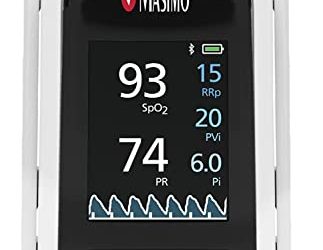
For a personal backup, the Innovo Deluxe iP900AP is the strongest fingertip pick here. The OLED display works in six directions, which suits bedside checks from awkward angles, and the plethysmograph and perfusion index add context when a reading looks borderline. Its alarm gives a threshold prompt during longer observation. One limit stated in the listing’s own answers matters for planning: it cannot monitor overnight, so it is strictly a spot-check tool. Used within your workplace rules, it covers the everyday backup role better than anything else in this group.
Specs
- OLED display with six display directions
- Alarm function
- Plethysmograph and perfusion index shown
- Cannot monitor overnight, per the listing’s answers
Best for: Nurses wanting a readable, alarm-equipped backup for repeat spot checks.
Watch out for: Confirm your facility allows personal devices for any patient-facing use before relying on it.
ASIN: B07YVGZPRZ
Zacurate Pro Series 500DL

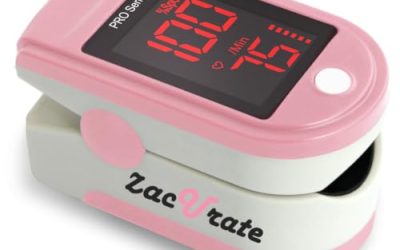
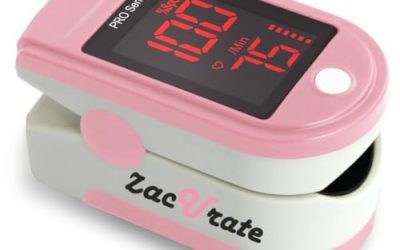
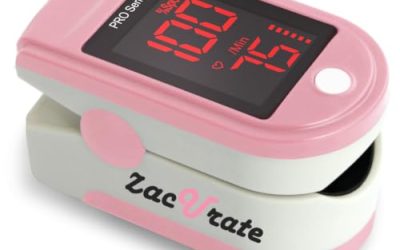
The Zacurate Pro Series 500DL is the simple, tough option for a pocket or training bag. Batteries and a lanyard are included, the silicone cover absorbs daily knocks, and the LED display keeps saturation and pulse plain to read. Its positioning matters in a clinical setting: the listing describes it for sports and aviation use, not as a medical device. Treat it as a practice and familiarisation tool, or a personal reference only — never a source for charted observations. Within those limits, it is the lowest-friction backup in the group.
Specs
- LED display
- Silicone cover included
- Batteries and lanyard included
- Positioned by the listing for sports and aviation use
Best for: Students and staff wanting a durable personal practice unit for training.
Watch out for: Its sports and aviation positioning means it is not a clinical device; keep charted readings to facility-approved equipment.
ASIN: B06XHTXD7S
CMI Health Rechargeable (PC-66)

The CMI Health rechargeable unit, model PC-66, suits staff who dislike battery faff and want an adjustable alarm. The alarm can be set for both oxygen saturation and pulse rate, the listing supports continuous monitoring as well as spot-checking, and the included carry case and AC adapter make it easy to keep charged and protected between shifts. For community nurses moving between visits, that combination of case, recharge and alarm travels well. It still sits behind facility equipment in the pecking order — a well-kept backup, not the primary instrument.
Specs
- Rechargeable, with AC adapter included
- Adjustable alarm for SpO2 and pulse rate
- Continuous monitoring and spot-checking
- Carry case included
Best for: Community and district nurses who want a cased, rechargeable backup with adjustable alarms.
Watch out for: A rechargeable backup is only a backup if it is charged; build charging into your end-of-shift routine.
ASIN: B07KGHKQHT
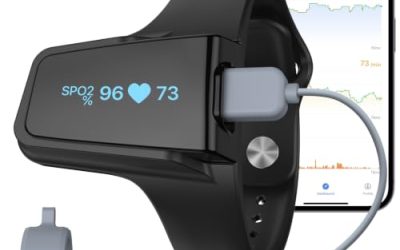
Wellue O2Ring-S

The Wellue O2Ring-S belongs in this list for specific assignments rather than routine rounds. It tracks saturation and pulse with a stated twenty-four-hour battery life, stores four ten-hour sessions in built-in memory, and works with app and PC software to produce reports. Where a workplace has approved overnight or extended recording for a particular patient, that stored-session design is the practical choice: several nights captured before anyone needs to sync. It is rechargeable, discreet to wear, and clearly a recording tool — not a substitute for ward monitoring systems.
Specs
- Tracks SpO2 and pulse rate
- Twenty-four-hour battery life
- Built-in memory for four ten-hour sessions
- Rechargeable
- App and PC software
Best for: Approved overnight or extended recording assignments where reports are needed afterwards.
Watch out for: Only use it for patient recording where your workplace has explicitly approved the device and the data handling.
ASIN: B0CKVTYGCW
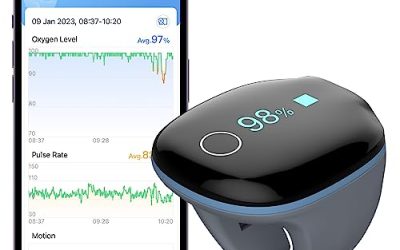
Wellue O2Ring

The standard Wellue O2Ring covers single-night and shorter recording tasks. Worn on the finger, it records saturation and pulse continuously, connects over Bluetooth, and generates app and PC reports, with a vibration reminder during wear and a stated sixteen-hour battery life. Against the O2Ring-S it trades storage and stamina for the same core job over one night. For a nurse asked to capture one night’s data under an approved plan, it does the job without the multi-session memory you may never use.
Specs
- Ring design worn on the finger
- Continuous recording of SpO2 and pulse rate
- Vibration reminder
- Bluetooth with app and PC reports
- Sixteen-hour battery life
Best for: Single-night recording tasks under an approved care plan.
Watch out for: Sixteen hours of battery means charging before every assignment night; do not start a recording on a partial charge.
ASIN: B08VW3VQKW
Which One Fits Your Situation
Ward-Based Backup for Spot Checks
Take the Innovo Deluxe iP900AP. The six-direction OLED removes the angle problem at the bedside, the alarm covers longer observation tasks, and the plethysmograph adds context to a borderline reading. Keep it as your second device for when the ward unit is busy, and follow your facility’s rules on which readings get charted from which equipment.
Community and District Visits
The CMI Health PC-66 fits a visiting bag best. Its carry case protects it between homes, recharging removes the spare-battery errand, and the adjustable alarm for saturation and pulse helps during longer assessments. Charge it with your other kit after each shift so the backup is genuinely ready when a home visit runs long.
Students Building Skills
Start with the Zacurate 500DL for practice. It is simple, covered against knocks, and runs on included batteries, so it is always ready for rehearsal readings on yourself and fellow students. Remember its listing positions it for sports and aviation rather than medical use, so treat every practice reading as technique training, not clinical data.
Approved Overnight Recording
Match the ring to the assignment length. One night under an approved plan: the Wellue O2Ring, with sixteen hours of battery and app or PC reports. Several nights before a review: the O2Ring-S, whose memory holds four ten-hour sessions on a twenty-four-hour battery. Either way, the data handling and device approval come from your workplace first.
Common Mistakes
- Charting readings from a personal device when your facility requires approved equipment.
- Assuming a sports and aviation positioned unit is suitable for clinical observations.
- Carrying a backup with flat batteries or an uncharged cell into a shift.
- Using a recording ring for a patient without workplace approval for the device and its data.
- Trusting one hurried reading instead of repeating the check with warm hands and a still, well-fitted sensor.
Frequently Asked Questions
Can I chart readings from my own pulse oximeter?
That depends entirely on your workplace. Many facilities require approved, calibrated devices for recorded observations, which makes a personal unit a backup for informal checks, training or community work only. Check your local policy before using one with patients. When in doubt, the ward device wins and the personal unit stays in your pocket.
What makes a backup unit genuinely useful on shift?
Three things: a reading that settles quickly, a display you can read from the angle you are actually standing at, and a carry system that keeps it on you. The Innovo’s six-direction OLED, the Zacurate’s lanyard and the CMI’s case all address one of those. A backup left in a locker helps nobody.
Are the recording rings useful for nursing work?
Only for specific, approved tasks. The Wellue rings record saturation and pulse over hours and produce app and PC reports, which can suit an overnight monitoring assignment your workplace has sanctioned. They are not ward monitors, they do not replace escalation protocols, and patient data on personal apps raises governance questions your employer must answer first.
Batteries or rechargeable for a work backup?
Choose whichever you will maintain. Included-battery models like the Zacurate and Innovo are ready after long gaps and suit sporadic use. Rechargeable units like the CMI PC-66 and the Wellue rings avoid battery swaps but fail silently if the charging habit slips. Match the system to your routine, and check the device before the shift, not during it.
Related guides
More from Amazon
Programs that pair well with the guide above. Offers and eligibility are set by Amazon and may change.
Set up recurring deliveries of everyday items on eligible products. Terms and savings are set by Amazon.
Explore Subscribe & SaveFree shipping on eligible items, Prime Video and more. Eligible new members can start with a free trial.
Start a Prime free trialAudiobooks and podcasts to listen to on the go. Eligible new members can start with a free trial.
Try Audible freeRead from a large library of eBooks and audiobooks on any device. Check Amazon for current plans.
Explore Kindle UnlimitedAs an Amazon Associate we earn from qualifying purchases.
Write Your Review
No reviews yet. Be the first to share your experience!