
Key takeaways
- Compare five pulse oximeters for home use, from readable fingertip units with alarms to Wellue rings that record overnight and build reports.
What's inside
As an Amazon Associate I earn from qualifying purchases. This post may contain affiliate links at no extra cost to you.
A home pulse oximeter earns its place in the drawer when someone in the household is tracking a cold that will not shift, managing a long-term lung condition, or simply wants a quick number before calling the doctor. The real decision is not accuracy claims on a box; it is whether the person using it can read the display easily, work the sensor with stiff fingers, and get a steady reading without fiddling. A device that frustrates an older parent will sit unused no matter how capable it is.
This guide is for families buying one shared device, adult children setting up a parent’s home kit, and anyone asked by a clinician to keep an eye on readings between visits. Every pick below comes from its Amazon product title and listing details, covering fingertip units with included batteries, a rechargeable model with alarms, and two wearable rings for overnight recording. These are personal tracking tools that support conversations with your clinician; they do not replace medical monitoring.
Quick Picks
As an Amazon Associate we earn from qualifying purchases.
| Product | Best for | Key spec from title |
|---|---|---|
| Zacurate Pro Series 500DL | Shared family drawer, simple spot checks | LED display, batteries and lanyard included |
| Innovo Deluxe iP900AP | Carers checking several times a day | OLED with six display directions and alarm |
| CMI Health Rechargeable (PC-66) | One device shared between two homes | Rechargeable with adjustable SpO2 and pulse alarm |
| Wellue O2Ring | Overnight pattern tracking | Ring with continuous recording and app reports |
| Wellue O2Ring-S | Multi-night overnight routines | Twenty-four-hour battery, four stored sessions |
How to Choose
Readability Comes Before Features
Start with the screen, because a reading nobody can see clearly is useless. Larger, brighter displays help in dim bedrooms and for eyes that struggle with small digits. The Zacurate uses an LED display, while the Innovo Deluxe offers an OLED that rotates through six display directions, handy when someone else is reading the result across the bed. If the main user wears reading glasses or checks numbers at night, display style matters more than extra modes. Compare how each model presents oxygen saturation and pulse rate before anything else on the listing.
Batteries Included or Rechargeable
Power sounds minor until the device is dead the one evening you need it. Two picks here, the Zacurate and the Innovo, run on included batteries, so they work straight out of the box and suit occasional checks. The CMI Health unit is rechargeable and ships with an AC adapter, which removes battery swaps but adds a charging habit to remember. The Wellue rings are rechargeable too, with stated battery life of sixteen or twenty-four hours. Match the choice to the user: simple replaceable batteries for forgetful households, rechargeable for daily trackers.
Fingertip Spot Checks or Wearable Recording
Decide how the readings will actually be used. Fingertip models answer a moment: clip on, wait, note the number, done. That suits most households and keeps one device easy to share. Wearable rings work differently. The Wellue O2Ring and O2Ring-S record oxygen and pulse continuously, store sessions, and produce app and PC reports, which helps if a clinician asked about overnight patterns. The trade-off is cost, charging, and more setup. If nobody will review the recorded data, a straightforward fingertip unit is the better buy; recording only earns its place when someone reads the reports.
Alarms, Fit and Honest Limits
Alarms help some households and annoy others. The Innovo Deluxe and the CMI Health unit offer alarms tied to oxygen or pulse thresholds, useful when a carer wants a prompt rather than constant watching. Fit matters too: cold fingers, nail polish and movement can all disturb a reading, so a sensor that sits securely counts for a lot. Finally, be honest about limits. The Zacurate listing positions its device for sports and aviation use rather than as a medical device, and no home unit replaces medical monitoring or a clinician’s judgement.
The 5 Best Options
Zacurate Pro Series 500DL

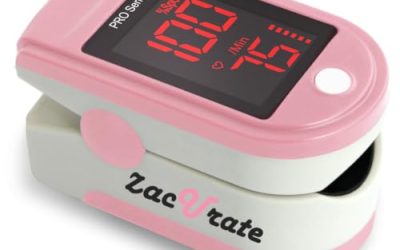
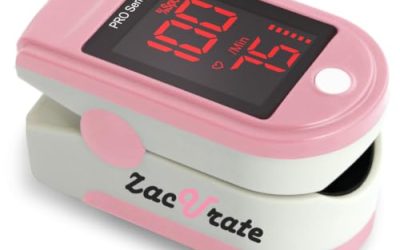
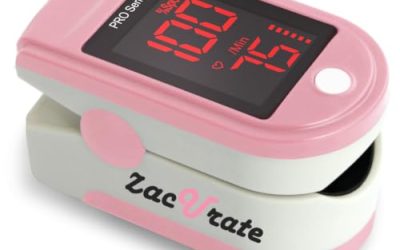
The Zacurate Pro Series 500DL is the straightforward shared-drawer option. Its LED display keeps the two numbers that matter large and plain, the silicone cover shrugs off the knocks of household life, and because batteries and a lanyard are included, it works the moment it arrives. The listing positions it for sports and aviation use rather than as a medical device, so treat it as a personal tracking aid. For families who want one simple clip-on unit that grandparents can operate without instructions, this is the easiest starting point in the group.
Specs
- LED display
- Silicone cover included
- Batteries and lanyard included
- Positioned by the listing for sports and aviation use
Best for: Households wanting a simple shared fingertip checker that works straight out of the box.
Watch out for: The listing frames it as a sports and aviation device, not a medical one, so discuss any health tracking plan with your clinician.
ASIN: B06XHTXD7S
Innovo Deluxe iP900AP

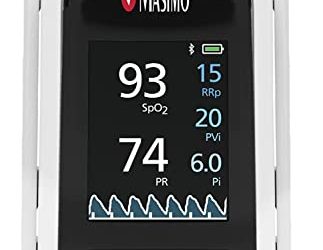
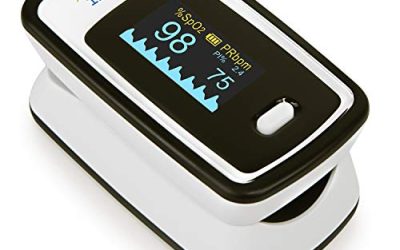
The Innovo Deluxe iP900AP suits homes where readings get taken often enough that extras start to matter. Its OLED screen shows in six directions, so whoever is helping can read it without twisting the patient’s hand, and the plethysmograph and perfusion index give more context than bare numbers. The built-in alarm can flag readings outside set limits. One firm limit from the listing’s own answers: it cannot monitor overnight, so treat it strictly as a spot-check device. For carers doing several checks a day, that combination of display and alarm is genuinely useful.
Specs
- OLED display with six display directions
- Alarm function
- Plethysmograph and perfusion index shown
- Cannot monitor overnight, per the listing’s answers
Best for: Carers doing frequent spot checks who want an alarm and a display readable from either side.
Watch out for: It is a spot-check device only; if overnight recording is the goal, look at the rings below instead.
ASIN: B07YVGZPRZ
CMI Health Rechargeable (PC-66)

The CMI Health rechargeable unit, model PC-66, fits households tired of swapping small batteries. It recharges with the included AC adapter and comes with a carry case, so it can live in a bag or a bedside drawer and travel between homes. Its adjustable alarm covers both oxygen saturation and pulse rate, and the listing supports both continuous monitoring and spot-checking, giving it more range than a basic clip-on. For a family sharing one device across two addresses, or a carer who checks in scheduled sessions, this is the organised middle option.
Specs
- Rechargeable, with AC adapter included
- Adjustable alarm for SpO2 and pulse rate
- Continuous monitoring and spot-checking
- Carry case included
Best for: Families sharing one device between homes who prefer recharging over buying batteries.
Watch out for: Rechargeable means a charging routine; if it sits unused for weeks, check the charge before relying on it.
ASIN: B07KGHKQHT
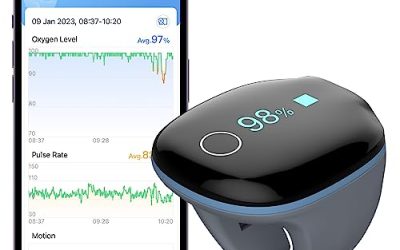
Wellue O2Ring

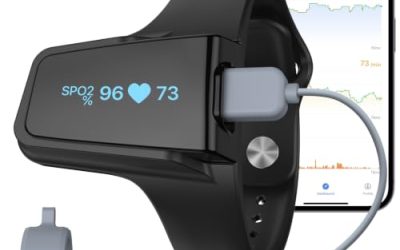
The Wellue O2Ring answers a different question: what happens across the whole night, not just at one moment. Worn as a ring, it records oxygen saturation and pulse rate continuously, connects by Bluetooth, and produces app and PC reports you can show a clinician. A vibration reminder prompts you during wear, and the stated battery life is sixteen hours. It asks more of the user — charging, wearing it nightly, reviewing reports — so it suits someone actively investigating sleep-related dips rather than a household wanting a quick daytime number.
Specs
- Ring design worn on the finger
- Continuous recording of SpO2 and pulse rate
- Vibration reminder
- Bluetooth with app and PC reports
- Sixteen-hour battery life
Best for: People asked to track overnight patterns and share recorded reports with a clinician.
Watch out for: It records for later review rather than acting as a live bedside alarm, and it needs nightly charging discipline.
ASIN: B08VW3VQKW
Wellue O2Ring-S

The O2Ring-S is the longer-running sibling for people who will genuinely wear a ring night after night. It tracks oxygen saturation and pulse rate with a stated twenty-four-hour battery life, and its built-in memory holds four sessions of ten hours each, so several nights can sit on the device before you sync. It is rechargeable and works with app and PC software for reports. Compared with the standard O2Ring, the appeal is stamina and storage: fewer charges, more nights captured. Choose it when overnight tracking is an ongoing routine, not a one-off experiment.
Specs
- Tracks SpO2 and pulse rate
- Twenty-four-hour battery life
- Built-in memory for four ten-hour sessions
- Rechargeable
- App and PC software
Best for: Ongoing overnight trackers who want several nights stored before syncing reports.
Watch out for: Memory holds four sessions, so sync on a schedule to keep the record complete.
ASIN: B0CKVTYGCW
Which One Fits Your Situation
One Device for the Whole Family
Pick the Zacurate 500DL. Batteries and a lanyard are in the box, the LED numbers are plain to read, and the silicone cover tolerates being passed around. It will not record anything, but for quick checks when someone feels unwell, simple and present beats clever and complicated. Keep it in one known drawer so everyone can find it.
A Parent Living Alone, Checked by Family
Consider the Innovo Deluxe iP900AP or the CMI Health PC-66. Both offer alarms, so a reading outside the agreed range announces itself instead of relying on your parent to notice and call. The Innovo’s rotating OLED helps visiting family read results; the CMI recharges, removing battery errands. Agree the alarm limits with their clinician first.
Asked to Watch Overnight Patterns
Choose a ring. The Wellue O2Ring records continuously for a sixteen-hour battery span and produces app and PC reports; the O2Ring-S stretches to twenty-four hours and stores four ten-hour sessions. Either gives a clinician a night of data instead of a single number. Neither replaces medical monitoring, so treat the reports as material for that conversation.
Readings Kept in a Notebook
If your clinician asked for a simple log of spot readings, the CMI Health PC-66 or the Innovo Deluxe both suit: take the reading at the same times each day, note oxygen, pulse and how the person felt, and bring the notebook to appointments. The CMI’s carry case keeps it with the notebook; the Innovo adds an alarm as a safety prompt between entries.
Common Mistakes
- Buying a recording ring when nobody will ever open the app or read the reports.
- Treating a single low reading as an emergency verdict instead of retaking it calmly and contacting a clinician with concerns.
- Forgetting that cold hands, movement and nail polish can disturb a fingertip reading.
- Assuming a sports and aviation positioned device is a medical monitor.
- Letting replaceable batteries die in the drawer, or a rechargeable unit sit flat, until the night it is needed.
Frequently Asked Questions
Can a home pulse oximeter replace medical monitoring?
No. These devices support personal tracking and give you numbers to discuss with a clinician; they do not diagnose, and they are not a substitute for medical monitoring or professional judgement. Some listings, including the Zacurate, position their device for sports and aviation use. If readings worry you, contact a clinician rather than relying on the device alone.
Fingertip unit or ring: which suits a home better?
For occasional spot checks, a fingertip unit is simpler, easier to live with and easy to share. A ring earns its place when the point is overnight recording: the Wellue models capture continuous data and build reports. Choose by the question you are asking — a moment’s number, or a whole night’s pattern — not by feature count.
Why do readings jump around between checks?
Small variations are normal. Movement, cold fingers, a loose fit and nail polish can all affect a fingertip sensor, and your oxygen level genuinely shifts with activity and breathing. Sit still, warm your hands, keep the sensor snug and retake the reading after a short rest. Note the pattern over days rather than reacting to one number.
How should we store readings to show a clinician?
Keep it simple and consistent: date, time, oxygen saturation, pulse rate and a few words on how the person felt or what they were doing. A notebook works fine for fingertip checks. If you use a Wellue ring, its app and PC reports organise overnight sessions for you, ready to print or share at the appointment.
Related guides
More from Amazon
Programs that pair well with the guide above. Offers and eligibility are set by Amazon and may change.
Set up recurring deliveries of everyday items on eligible products. Terms and savings are set by Amazon.
Explore Subscribe & SaveFree shipping on eligible items, Prime Video and more. Eligible new members can start with a free trial.
Start a Prime free trialAudiobooks and podcasts to listen to on the go. Eligible new members can start with a free trial.
Try Audible freeRead from a large library of eBooks and audiobooks on any device. Check Amazon for current plans.
Explore Kindle UnlimitedAs an Amazon Associate we earn from qualifying purchases.
Write Your Review
No reviews yet. Be the first to share your experience!