
Key takeaways
- Five massage guns for runners compared by travel size, speeds and head choice, for calves, quads, glutes and feet before and after training runs.
What's inside
As an Amazon Associate I earn from qualifying purchases. This post may contain affiliate links at no extra cost to you.
For a runner, the buying decision is not raw power. It is whether one device can handle two different jobs: a light, brief pass over calves and quads before an early run, and slower, deeper work on glutes and feet afterwards. Size decides the rest. A compact gun travels to race weekends and lives in a gym bag, while a full-size model stays home where the serious recovery happens. Speeds, head shapes and noise level matter through that lens.
This guide is written for new runners building a recovery habit, club runners training several times a week, and marathoners who pack light for race weekends. The five picks were chosen from their Amazon product titles and listed details: speed counts, head counts, stated amplitude, size descriptions and quiet-operation features, matched against the muscle groups runners actually treat.
Quick Picks
As an Amazon Associate we earn from qualifying purchases.
| Product | Best for | Key spec from title |
|---|---|---|
| Hyperice Hypervolt Go 2 | Race-weekend travel | Compact travel size, 3 speeds |
| Theragun Prime | Guided pre and post-run routines | Bluetooth enabled, 4th generation |
| Hyperice Hypervolt 2 Pro | Fine speed control at home | 5 speeds with Quiet Glide |
| TOLOCO EM26 | Many head shapes for legs and feet | 10 massage heads, silent brushless motor |
| Hyperice Hypervolt 2 | Quiet early-morning sessions | Quiet Glide, ergonomic handle |
How to Choose
Size and Weight for Race Travel
Decide where the gun will live before you compare anything else. A compact travel model fits a race bag alongside shoes and gels, comes through airport security in hand luggage, and is the one you will actually use in a hotel room the night before a race. A full-size model earns its space at home with more heads and more speeds. Some runners eventually own both, but your first purchase should match where most of your recovery time happens. Weight in the hand also matters during longer calf and glute sessions.
Speeds for Two Different Jobs
Pre-run and post-run work ask for opposite things. Before a run, the goal is a brief, light pass at a low setting to wake up calves and quads without fatiguing them. After a run, slower and deeper work on glutes, calves and the soles of the feet is where a gun earns its keep. More speed steps make that switch easier to fine-tune, while three speeds are enough if the lowest setting is genuinely gentle. Never use a gun as a substitute for warming up.
Heads for Legs, Feet and Glutes
Legs present very different targets. Broad heads suit quads and glutes, rounder heads work into calves, and a smaller or firmer shape reaches the sole of the foot after long runs. A kit with many heads lets you match shape to muscle instead of forcing one attachment everywhere. Check the listing for the head count and shapes included, and think about your own problem areas: chronic calf tightness and tired feet need different tools than heavy quads. Feet in particular reward a dedicated smaller head after long runs.
Quiet Use and Knowing the Limits
Early-morning runners share walls, floors and sleeping households, so a model described as quiet, or built around quiet-operation technology, is a practical feature rather than a luxury. Just as important is knowing where a gun does not belong: keep it off the spine itself, away from the front of the neck, and off injured areas, including suspected stress fractures, fresh strains and swollen joints. Soreness that changes how you run needs rest and assessment, not more percussion. When in doubt, rest first and reassess the next day.
The 5 Best Options
Hyperice Hypervolt Go 2

The Go 2 is the travel pick in this group, built at a compact size that disappears into a race bag or gym kit. Three speeds cover the essential range: a gentle setting for a light pass before a morning run and firmer settings for calf and quad work afterwards. Two heads keep the kit simple, which suits hotel-room routines where you want to be done in minutes. For runners whose biggest recovery gap is away from home, this is the model most likely to be within reach when it matters.
Specs
- Brand: Hyperice
- Model: Hypervolt Go 2
- Speeds: 3
- Heads: 2 included
- Size: Compact travel size
Best for: Marathoners and travelling runners who recover in hotel rooms and race expos.
Watch out for: Only two heads are included, so check the shapes supplied if foot work is a priority for you.
ASIN: B09W737GFR
Theragun Prime

The Prime, in its 4th generation, is Bluetooth enabled, which suits runners who like structure: guided routines take the guesswork out of how long to spend on each muscle group after a long run. Its title also describes it as quiet, a genuine plus for the early-morning sessions runners keep. As a full-size home device it anchors a regular routine through a training block, reminding you to treat the calves and glutes you would otherwise skip when tired.
Specs
- Brand: Therabody
- Model: Theragun Prime, 4th generation
- Connectivity: Bluetooth enabled
- Noise: Described as quiet in the product title
Best for: Structured trainers who want guided routines through a marathon or half-marathon block.
Watch out for: The listing details confirmed here are brief, so verify the included heads on the product page before ordering.
ASIN: B086Z6V3S6
Hyperice Hypervolt 2 Pro
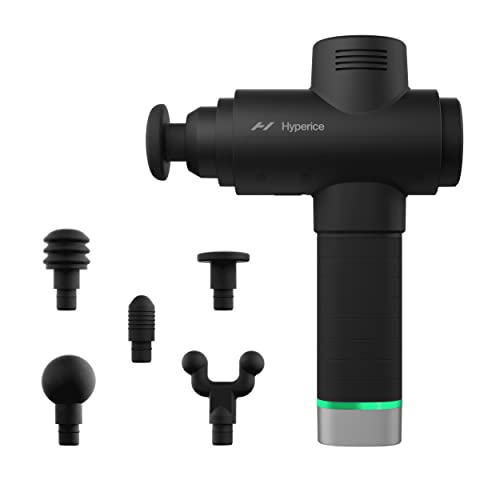
The 2 Pro is the fine-control option, with five speeds instead of three, which lets you separate a genuinely light pre-run setting from the deeper post-run work on glutes and quads. Quiet Glide technology keeps the sound down at home, and five heads give you shapes for both large leg muscles and smaller targets like the sole of the foot. It is the stay-at-home anchor of this list, aimed at runners in heavy training weeks who use a gun most days.
Specs
- Brand: Hyperice
- Model: Hypervolt 2 Pro
- Technology: Quiet Glide
- Speeds: 5
- Heads: 5 included
Best for: High-mileage runners who want the widest speed range for daily home recovery.
Watch out for: As a full-size model it is a home device first, so plan on a separate solution for race travel.
ASIN: B09JB64T9Z
TOLOCO EM26
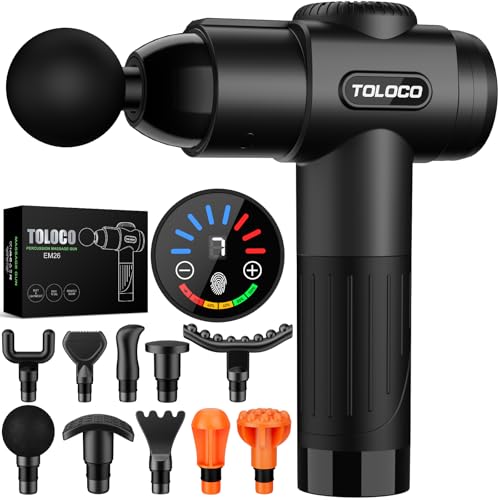
The EM26 brings the largest head selection here, with 10 massage heads to match against calves, quads, glutes and feet. That variety matters for runners because no single shape suits both a broad quad and the arch of a foot. Its silent brushless motor keeps early sessions considerate in a shared house. It suits runners who are still learning which areas respond best and want one kit that lets them experiment across a whole training cycle without buying extra attachments separately.
Specs
- Brand: TOLOCO
- Model: EM26
- Heads: 10 massage heads included
- Motor: Silent brushless motor
Best for: Runners who want maximum head variety for legs and feet in a single kit.
Watch out for: Ten heads need organised storage, so keep the case by your training gear rather than in a drawer.
ASIN: B083L8RNJR
Hyperice Hypervolt 2

The standard Hypervolt 2 balances the range: Quiet Glide technology for low noise, three speeds, five heads and an ergonomic handle that stays comfortable during longer calf and glute sessions. It fits the runner who trains mostly at home, rises early, and shares the house with people still asleep at the hour recovery happens. Five heads cover the main leg groups without the clutter of a ten-head kit, and the handle design helps when you angle the device behind your own leg.
Specs
- Brand: Hyperice
- Model: Hypervolt 2, Black
- Technology: Quiet Glide
- Speeds: 3
- Heads: 5 included
- Handle: Ergonomic design
Best for: Early-morning home trainers who need quiet sessions and comfortable one-handed use.
Watch out for: Three speeds mean larger steps between settings, so build pressure gradually on race-tired legs.
ASIN: B0CDHLKJ2H
Which One Fits Your Situation
You Travel to Races Several Times a Year
Choose the Hypervolt Go 2. Its compact travel size fits the bag that already holds your shoes and race kit, so recovery happens the night before and the evening after, not just at home. Three speeds are enough for hotel-room work on calves, quads and feet. It is also light enough to use one-handed on your own calves without your arm giving out halfway through.
You Are Deep in a Marathon Training Block
Choose the Hypervolt 2 Pro. Five speeds let you keep pre-run work genuinely light and still have deeper settings for glutes and quads after long runs. Five heads cover the full leg, and Quiet Glide keeps daily sessions from taking over the house. That combination suits the repetitive rhythm of heavy training weeks.
You Train Early While the House Sleeps
Choose the Hypervolt 2. Quiet Glide technology and an ergonomic handle make short, considerate sessions easy before dawn runs. Five heads handle calves, quads and glutes, and three speeds keep the routine simple when you are half awake and working by habit. It is a sensible middle ground between the travel model and the Pro.
You Are New to Massage Guns and Unsure What You Need
Choose the TOLOCO EM26. Ten heads let you learn what your legs actually respond to, from broad quad work to focused foot sessions, without buying attachments later. The silent brushless motor keeps the experiment quiet, and one kit covers your first full training cycle. One purchase, one learning curve, and no extra attachments to buy mid-season.
Common Mistakes
- Using the gun on a fresh strain, swollen joint or suspected stress injury instead of resting it.
- Hammering calves at the top setting the night before a race and waking up with fatigued legs.
- Skipping the feet and glutes, which do much of the work in running, and only treating quads.
- Running the head over the spine or the front of the neck while working around the body.
- Treating the gun as a warm-up replacement rather than a light addition before easy runs.
Frequently Asked Questions
Should runners use a massage gun before or after a run?
Both, but differently. Before a run, keep it brief and light: a short pass at a low setting over calves and quads to wake the muscles up, never as a replacement for warming up. After a run, slow down and spend longer on glutes, calves and feet, where the day’s work accumulates.
Which muscles should runners focus on?
Calves, quads and glutes take most of the load, and the soles of the feet deserve attention after long runs. Work the thick part of each muscle, keep the head moving, and stay off the spine, the front of the neck and any injured area. Hamstrings respond well too, worked in slow passes.
Can a massage gun help with tight calves?
It can ease the feeling of tightness in the calf muscles, especially after long or hilly runs. Use a rounder head, start on a low speed, and work the meaty part of the calf rather than the Achilles tendon. Persistent one-sided tightness, swelling or pain that changes your stride needs a professional check.
How long should a runner spend per muscle group?
A minute or two per area is a sensible guide for post-run work. Move slowly, pause where the muscle feels tight, and stop if anything feels sharp. Pre-run passes should be shorter still, just enough to feel the muscle wake up. Total sessions usually stay well under fifteen minutes.
Related guides
More from Amazon
Programs that pair well with the guide above. Offers and eligibility are set by Amazon and may change.
Set up recurring deliveries of everyday items on eligible products. Terms and savings are set by Amazon.
Explore Subscribe & SaveFree shipping on eligible items, Prime Video and more. Eligible new members can start with a free trial.
Start a Prime free trialAudiobooks and podcasts to listen to on the go. Eligible new members can start with a free trial.
Try Audible freeRead from a large library of eBooks and audiobooks on any device. Check Amazon for current plans.
Explore Kindle UnlimitedAs an Amazon Associate we earn from qualifying purchases.
Write Your Review
No reviews yet. Be the first to share your experience!